Why I Tested Budget Pruners
A good bypass pruner is the tool you reach for more than any other. I use mine daily through the growing season — deadheading, shaping shrubs, cutting back perennials, harvesting vegetables. Yet most pruner reviews are written after a week of light use, not after a full New England season of dirt, sap, humidity, and hard cuts.
Last spring, I bought three pruners priced under $50. I used nothing else for pruning all season. No manufacturer sponsored this. I sharpened them, cleaned them, and pushed each one through the same work. By November, I knew which one earned its place on my belt.
What Actually Matters in a Pruner
Before I name the tools, here is what I have learned matters — and what doesn't.
Blade steel quality matters more than any other feature. A pruner that won't hold an edge past June costs you time and damages plants. Bypass design is non-negotiable for live wood. Anvil pruners crush stems; use those only on dead material. Weight matters if you prune for hours. Ergonomics matter if you have small hands or any wrist trouble. And replaceable parts matter — a pruner you cannot disassemble, sharpen properly, or find springs for is disposable, and I don't buy disposable tools.
What does not matter? Fancy grips, brand prestige, and features you won't use. I have never needed a rotating handle. I have never wished for a locking mechanism with more positions. A pruner needs to cut cleanly, fit your hand, and survive the season.
The Three I Tested
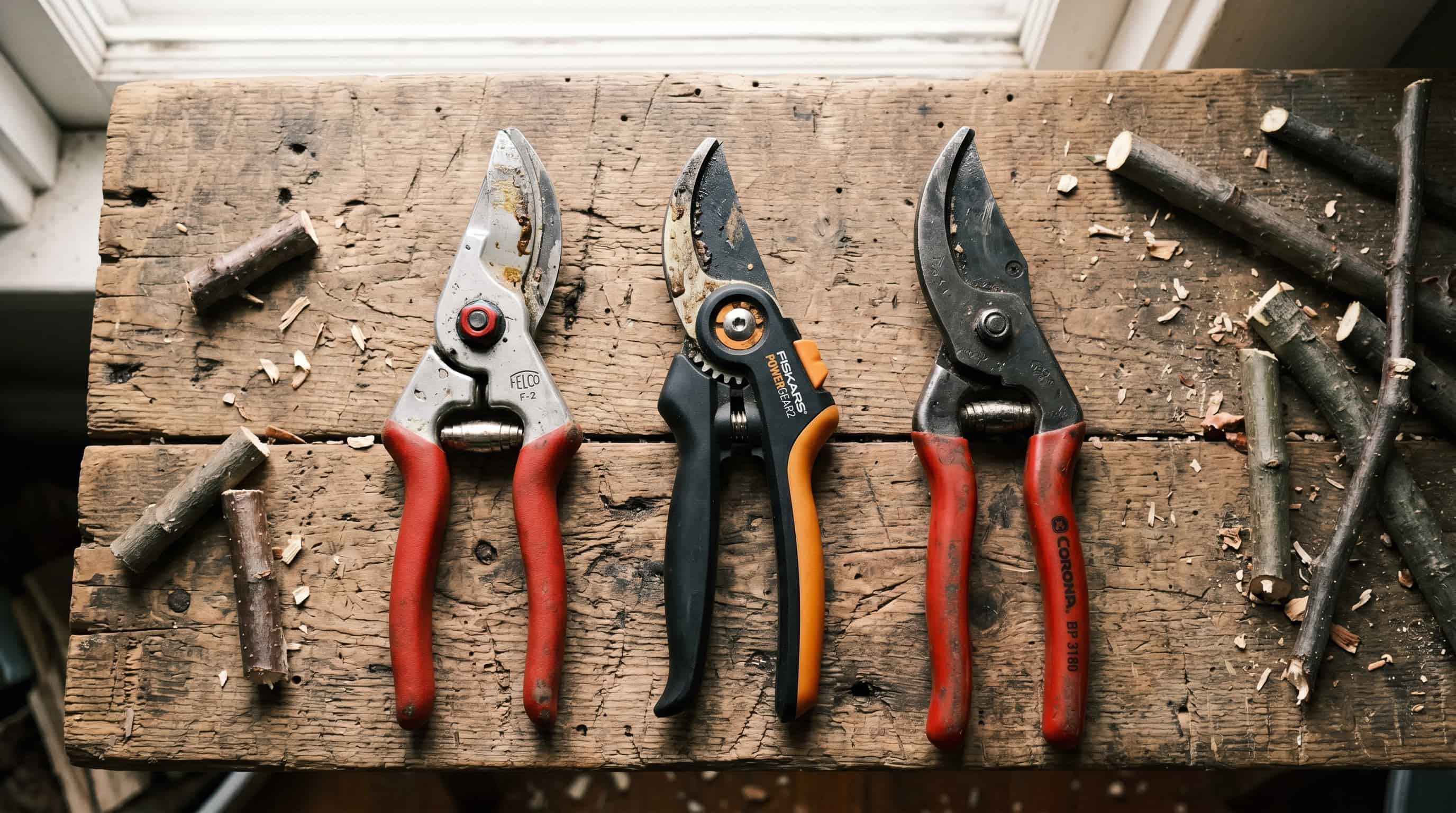
The Corona BP 3180 is the most affordable of the three, typically priced around $25. The blades are forged steel, and the handles are aluminum with basic red grips. Right out of the package, it felt solid in my hand — a little heavier than the others but balanced enough that I noticed it only after a long session. The cut quality on green stems was clean through June. By late July, I noticed it needed more frequent sharpening than the others. The edge dulls faster, especially on woody growth. I sharpened it twice over the season to keep it cutting well. The sap groove worked as intended, and the locking mechanism stayed reliable through the fall. For a gardener who prunes occasionally and sharpens regularly, this pruner is entirely adequate. It is not exciting. It is a workable tool that costs what a pruner should cost if you are not a professional.
The Fiskars PowerGear2 Bypass Pruner, around $35, was the most polarizing tool in this test. The geared mechanism multiplies cutting force — you feel the difference immediately on anything thicker than a pencil. For someone with reduced hand strength, arthritis, or wrist issues, this feature is genuinely valuable. But the mechanism adds bulk and moving parts. By August, mine developed a slight wobble in the gear that I could not fully tighten out. The cut quality on green stems was good, though the blade geometry leaves a slightly rougher edge on woody cuts than the other two. The grips are comfortable for medium to large hands and noticeably less so for smaller hands. I gave this pruner to my neighbor, who has arthritis, and she has loved it. For me, the extra moving parts and the wobble moved it out of daily-use territory.
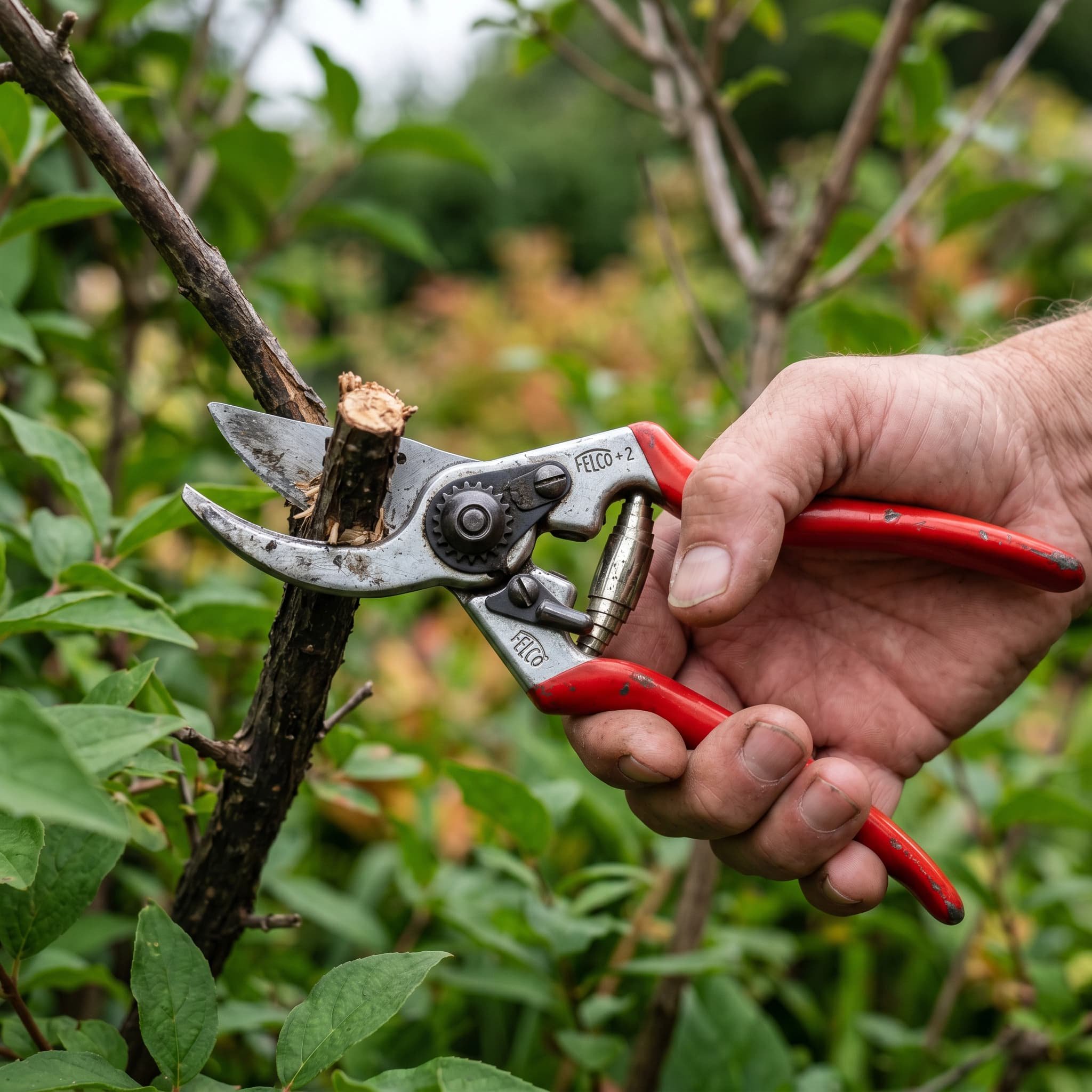
The Felco F-2 Classic is priced at the top of our range, just under $50. The blades are forged steel, the handles are aluminum with replaceable red grips, and every single part is available as a replacement — spring, blade, anvil blade, lock, grips, everything. This matters. I have a Felco that is twelve years old and works like new because I replaced the blade and spring once. The F-2 cut cleanly on everything I threw at it, from delicate basil stems to three-quarter-inch hardwood. The blade edge held through the entire season with one mid-July sharpening. The ergonomics fit my hand better than either of the others, though hand fit is personal. The weight is moderate, and the balance lets the pruner disappear into your grip during long sessions. The downside is the price, which is high for a home gardener who prunes once a week. The upside is that you buy it once and maintain it forever.
What I Would Buy Again
For daily garden use in New England conditions, the Felco F-2 is my pick. It held its edge, cut cleanly, and is fully repairable. The higher upfront cost is offset by longevity — a tool you can rebuild rather than replace.
The Corona BP 3180 is the right pruner for a gardener who uses one moderately and sharpens diligently. It is a fair price for a solid tool that will do the work. It is not a Felco, but it is not pretending to be.
The Fiskars PowerGear2 serves a real need — the geared mechanism genuinely helps if hand strength is limiting — but the extra moving parts and the developing wobble kept it out of my permanent kit. I would recommend it to a friend with arthritis and to nobody else.
Clean your pruner at the end of every session. Wipe the blade with a cloth, remove sap with rubbing alcohol, and oil the pivot point lightly. Sharpen at least twice a season — more if you prune woody material often. A dull pruner crushes stems and invites disease. A sharp pruner makes a clean cut that calluses fast. The best pruner in the world is useless if you don't maintain it, and an average pruner kept sharp will outperform a neglected premium tool every time.