What "Survives" Means Here
I have sold thousands of plants to Boston-area gardeners. Many of those plants came back the next spring looking embarrassed. A few came back looking triumphant. This list is about the triumphant ones.
Survival in a Boston backyard means more than a number on a hardiness zone tag. It means sitting in wet clay through a January thaw and not rotting. It means leafing out in April and getting hit by a 28-degree night on May 10 and not turning black. It means hosting Japanese beetles in July and looking fine by August. It means doing all of that for years, not just for one lucky season.
I grow every plant on this list in my own yard in Dorchester, in heavy soil amended only with compost. None get coddled. If they made the cut, they earned it.

Seven That Earned Their Place
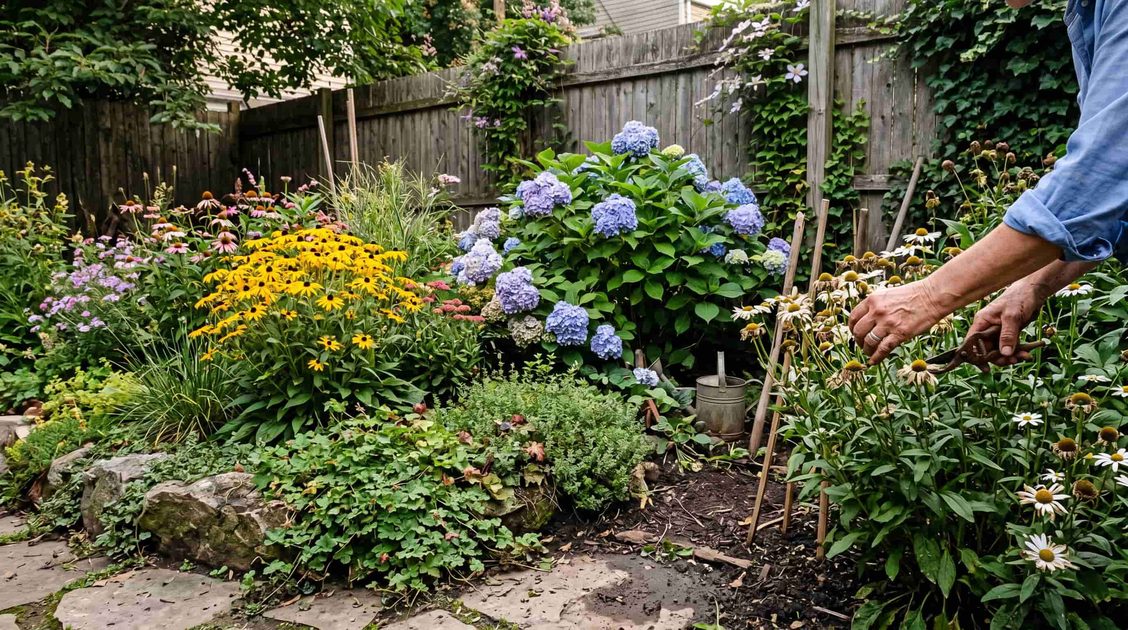
Rudbeckia fulgida 'Goldsturm' is the perennial I recommend when someone has killed everything else. It blooms from late July into October with black-eyed yellow daisies on sturdy stems that don't need staking. It spreads politely by rhizomes in clay, shrugs off drought once established, and deer mostly ignore it. I have divided mine three times and given clumps away to neighbors. It has never failed.
Hydrangea paniculata 'Limelight' is the hydrangea for people who have given up on hydrangeas. Unlike bigleaf types that die back to the ground and refuse to bloom, this one flowers on new wood every year, no matter how harsh the winter. Cone-shaped blooms open pale green in midsummer, age to pink in fall. Give it full sun and a bit of room — it gets larger than the tag says.
Hemerocallis 'Happy Returns' blooms from June through September with lemon-yellow flowers that close up each night and open fresh the next morning. It handles heavy soil, partial shade, and total neglect. I planted three in a strip of dry clay next to my driveway. They are now a dozen, blooming without irrigation.
Nepeta racemosa 'Walker's Low' forms a mound of grey-green foliage with lavender-blue flower spikes from late spring through early fall. It tolerates dry clay, poor drainage, and humidity. Unlike true lavender, which rots in our winter wet, this catmint comes back reliably. Shear it back by half after the first flush of bloom and it will flower again.
Itea virginica 'Little Henry' is a native shrub that deserves more use. White bottlebrush flowers in June attract pollinators. In fall, the foliage turns deep burgundy-red and holds for weeks. It grows in wet clay and partial shade without complaint, stays compact, and has no serious pest issues. I have one tucked under a large maple where it gets three hours of sun. It blooms anyway.
Geranium 'Rozanne' sprawls and weaves through other plants with violet-blue flowers from June until frost. It handles heat and humidity, which kill lesser hardy geraniums by mid-August. It does not need deadheading. The foliage stays healthy all season. I use it to cover the bare ankles of taller perennials — a job it performs with grace.
Calamintha nepeta subsp. nepeta is the plant I almost didn't write about because not enough people know it. Tiny white flowers on wiry stems bloom from midsummer into October, smelling faintly of mint when brushed. It thrives in dry clay, full sun, and neglect. Bees work it nonstop for months. It self-sows lightly — welcome seedlings, not invasive ones — and has no disease problems I have ever seen.

What Ties These Together
None of these plants are rare. None are fragile. Every one of them thrives without irrigation once established, handles our winter wet without rotting, and blooms reliably regardless of spring temperature swings. They work in heavy soil, and most tolerate part shade. I have killed plenty of fancier plants in my yard. These seven are still here.
If you are starting over after a frustrating season, start here. Plant any three of these this spring, mulch with two inches of shredded leaves, water them in, and watch what happens. They will not die. They will not demand you become an expert. They will just grow, bloom, and come back next year. That's what survival looks like in a Boston backyard.