The Late June Window
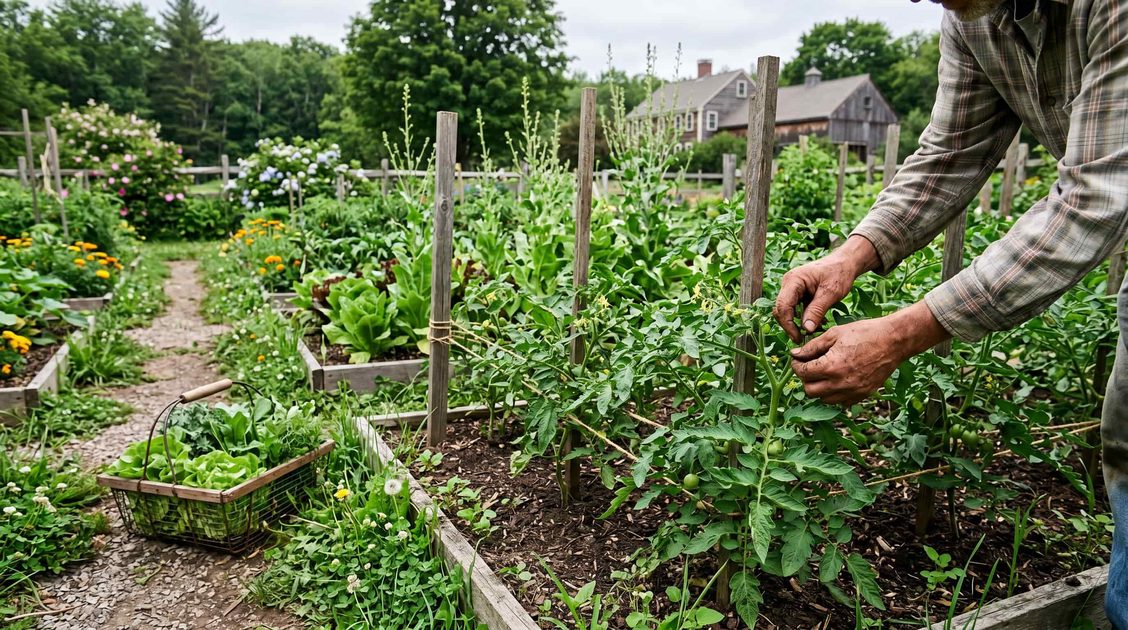
Late June feels like the reward — frost is gone, soil is warm, and everything is growing fast. But this is also when the garden's trajectory locks in. Pests arrive, spring crops bolt, and watering needs shift. I walk my beds every evening to catch issues early, because a single Japanese beetle today is manageable, while a dozen in three days is a real problem. Tomato suckers left for a week turn into a humidity-trapping thicket. Lettuce that was perfect on Monday can be bitter and bolted by Friday. Late June doesn't wait.
Tomatoes: Suckers, Support, and Feeding
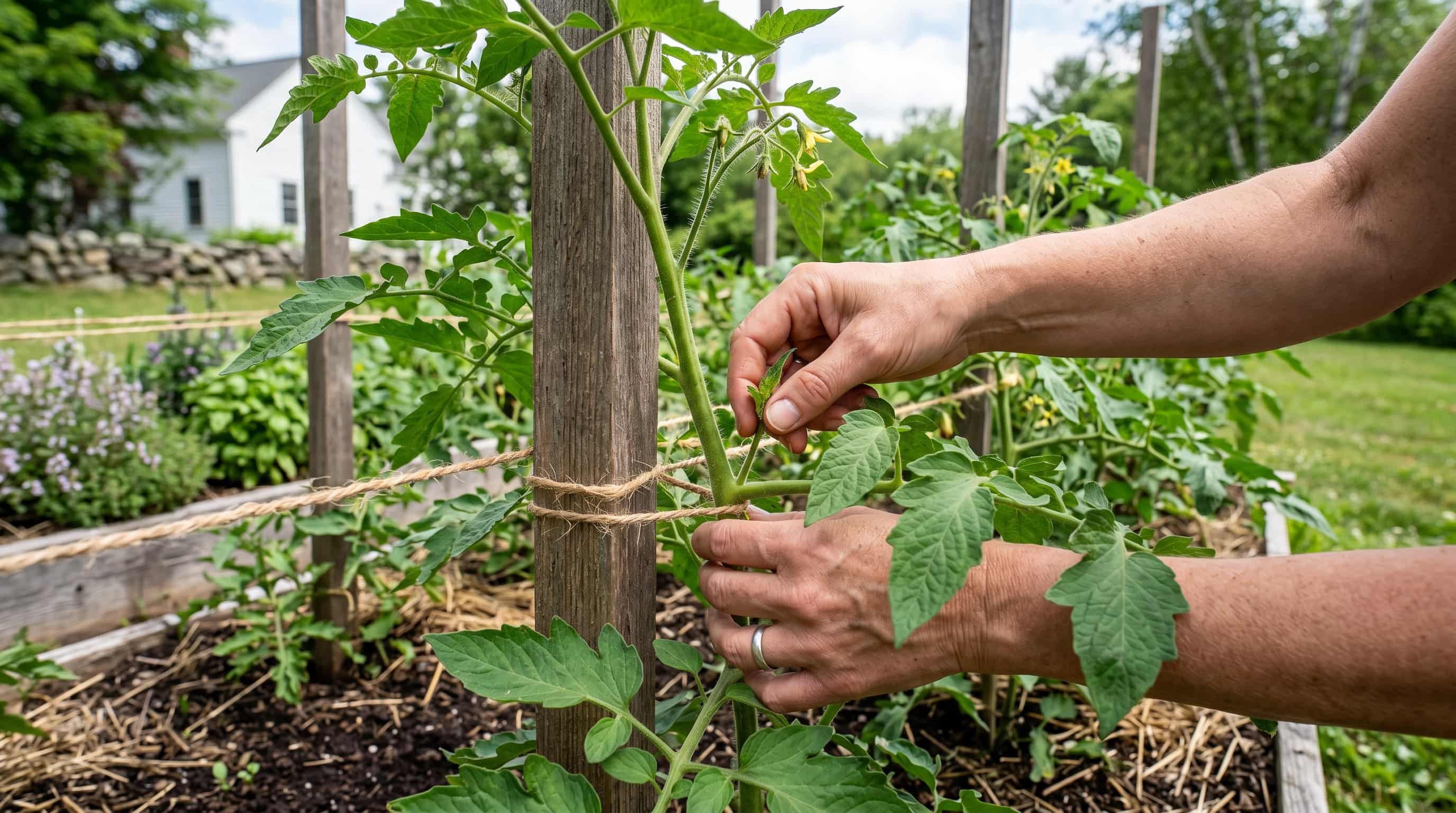
Indeterminate tomatoes need regular suckering in our humid climate. Pinch out the shoots that form between the main stem and leaf branches while they're small, ideally in the morning when stems snap cleanly. Leave suckers on determinate varieties alone — they need the foliage to ripen their crop. Check your stakes and ties now, before the plants double in size. Flimsy cone cages are for peppers, not for a tomato that can reach six feet by midsummer. I use Florida weave or heavy-duty cages.
When the first small fruits appear, side-dress lightly with compost and a balanced organic fertilizer. In our clay soils, residual nitrogen from spring can still be abundant — if plants are dark green and vigorous, skip the extra nitrogen to avoid growing leaves at the expense of fruit. Also remove any leaves touching the soil to reduce the risk of fungal spores splashing up.
The Spring Crop Transition
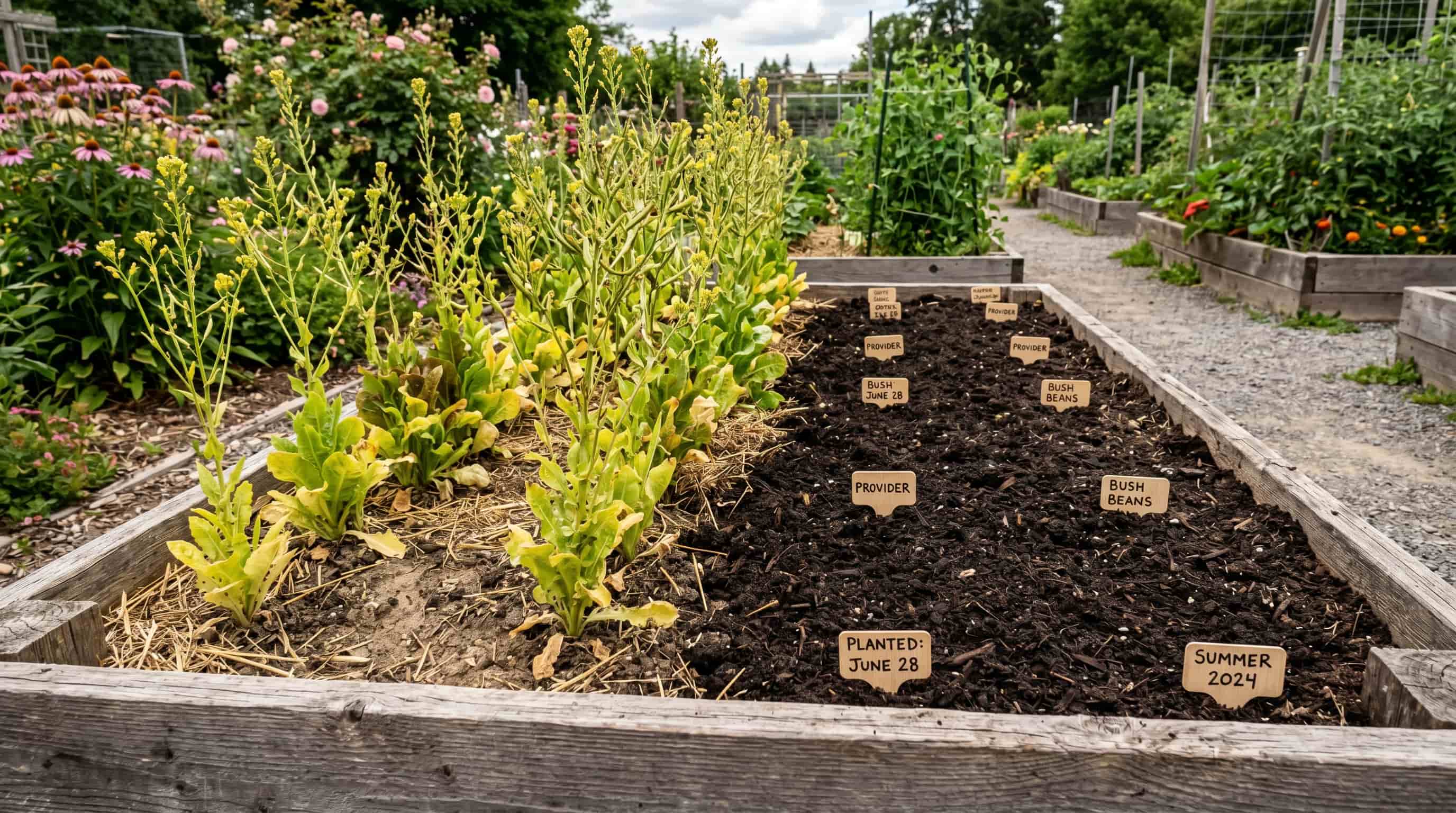
When soil temperatures hit 70 degrees, cool-season crops shift from leaf production to reproduction. Lettuce bolts, cilantro flowers, and spinach turns bitter. You can't stop it, so work with the timing. Harvest everything you can from spring greens this week, clearing space while the leaves are still edible. Bolting lettuce is okay if caught early; let some cilantro go to seed for coriander and fall volunteers. Pull spent plants and use the ground for bush beans or another round of basil, both of which still have time to produce. Start fall brassicas in cells now for transplanting in late July.
Watering: The Shift Everyone Misses
By late June, rainfall patterns shift — longer dry spells broken by heavy, runoff-prone storms. If you're still watering lightly every day, you're training roots to stay shallow, where they'll scorch in the first heat wave. Water deeply every three days instead, enough to reach six inches down. Check with your finger: dry at the second knuckle means it's time. In sandy soils, water a bit more frequently but for shorter periods. In heavy clay like mine, water longer but less often to avoid waterlogging.
Mulch now with shredded leaves, straw, or grass clippings from an untreated lawn. Bare soil loses moisture, overheats, and invites weeds. Two inches of mulch solves all three at once.
Pests: The First Wave
Japanese beetles are emerging. Hand-pick them early in the morning when they're sluggish and drop them into soapy water. Do this daily for a week before populations explode. Skip the pheromone traps — they attract beetles from far beyond your yard. Check squash leaves for copper-colored egg clusters and crush them now. A hard spray of water handles most aphids on tender growth tips; lady beetles and lacewings usually arrive to handle the rest, so hold off on insecticidal soap. Also watch for powdery mildew on cucurbits — remove a few interior leaves for air circulation and water at soil level to slow its spread.
What Not to Do Right Now
Don't seed cool-season crops again yet — wait until mid-July or they'll bolt immediately. Don't prune spring-flowering shrubs, which are setting next year's buds. Don't fertilize the lawn during summer dormancy. And don't leave any soil bare. Cover it with mulch or plants.
Walk your garden with a notebook. Write down what's bolting, what's thriving, what's stressed. That notebook will be more valuable next spring than any book. The garden is telling you what it needs. Listen.