Why I Started This Blog
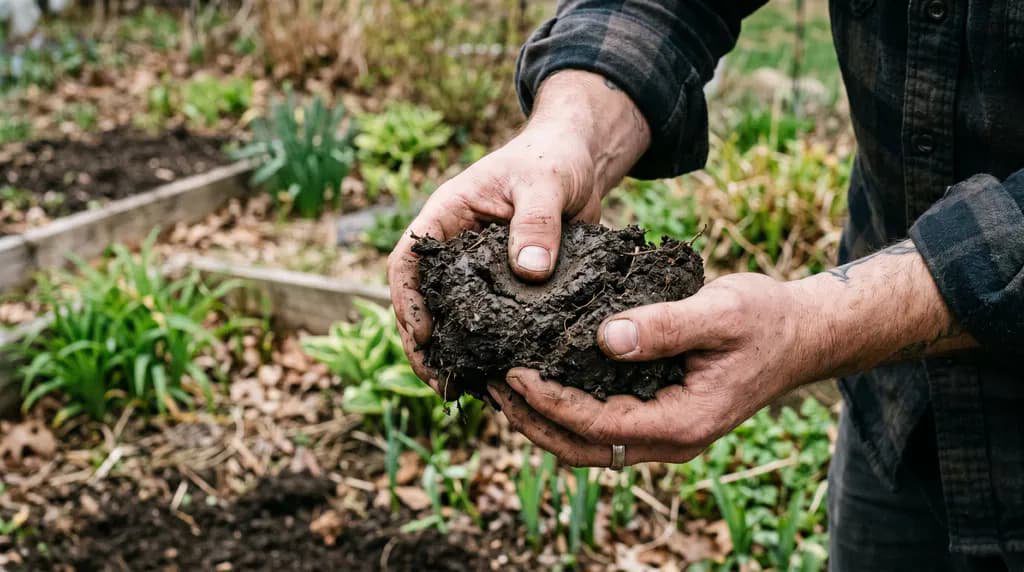
I did not start this blog because my garden looked beautiful. I started it because too many people around here feel like failures when their plants die — and I have spent enough seasons in New England soil to know that death in the garden is rarely the gardener's fault.
I grew up on the Maine coast, where the growing season is short and the wind off the water stunts everything that isn't built for it. I studied horticulture at UMass Amherst, then spent six years working at Mahoney's Garden Centers in Boston. I started at the register and eventually managed the perennial department. I have sold thousands of plants to people who were set up to fail — not by their own hands, but by gardening magazines shot in Oregon, by plant tags written for zone 7, by YouTube channels that never mention what clay does to lavender roots in January.
Every April, the same customers came back. Their hydrangeas didn't bloom. Their rosemary didn't overwinter. Their expensive perennial border looked great for one season and then rotted out. They asked me the same question in different words: What am I doing wrong?
Most of them were not doing anything wrong. They were gardening in New England with advice written somewhere else.
What New England Gardening Actually Means
Let me tell you what gardening here really means.
Our native soil is heavy clay that holds water like a sponge in spring and cracks into deep fissures by August. Our growing season is short — we can get a frost in late May and another in early October, and that narrow window punishes anyone who follows a generic planting calendar. Our winters are wet and freeze-thaw on repeat, which heaves perennials right out of the ground and kills things that survive reliably in Connecticut or Long Island.
National gardening content does not account for any of this. It tells you to plant lavender in a sunny spot and ignores that our winter wet will drown its roots long before the cold kills it. It tells you to mulch in fall without explaining that too much mulch in our climate becomes a vole hotel. It promises a low-maintenance perennial border and doesn't mention that half the plants on the list will give you two seasons at best before they give up.
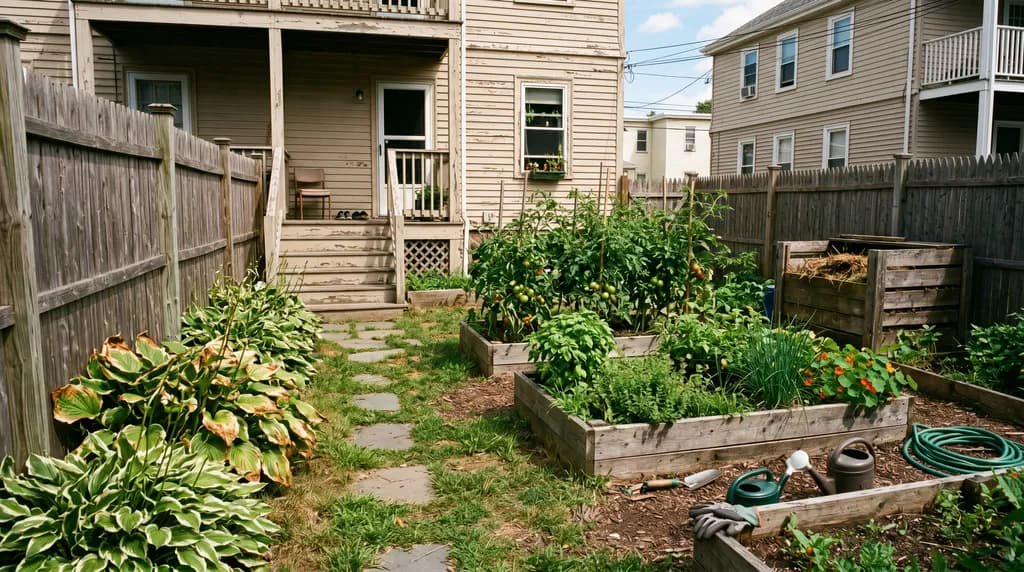
I know this because I have made every one of those mistakes myself. I have killed lavender — multiple times. I have misjudged the sun exposure on the north side of my house and watched a perfectly good oakleaf hydrangea decline over three seasons before I admitted defeat and moved it. I have filled raised beds with what I thought was a good soil mix, only to watch it compact into something closer to brick because I didn't account for how our native clay would interact with the imported material underneath.
A Few Things I Believe
So here is what I believe, after more than a decade of growing in this region.
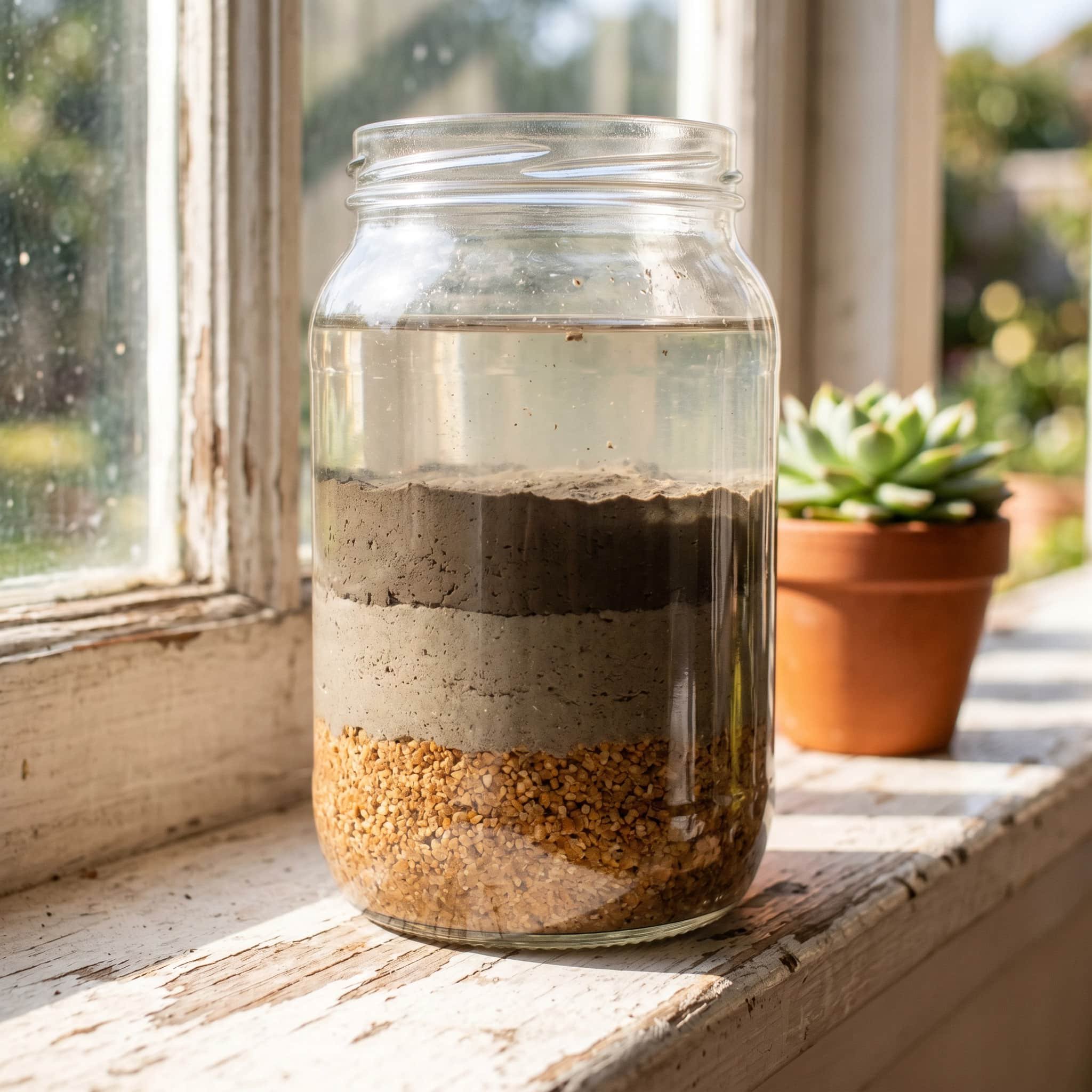
Start with your ground, not with a product. Before you buy a single amendment, do a jar test. Scoop soil from the spot where you actually want to plant, put it in a clear jar with water, shake it hard, and let it settle for 48 hours. The layers that form — sand on the bottom, silt in the middle, clay on top — will tell you more about your soil than any expensive lab kit ever will. If your jar comes back 40 percent clay, adding a bag of compost is not going to fix your drainage problem. You need to know what you are working with before you spend a dollar.
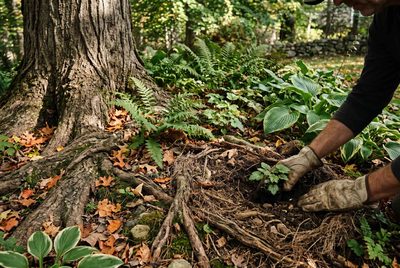
Plant for your actual light, not the fantasy on the tag. I cannot count how many times I have heard someone say "the tag said full sun" while standing in a spot that gets four hours of dappled morning light and deep shade by 1 p.m. Plant tags are written for idealized conditions that almost never exist in a real backyard with trees, fences, and neighboring houses. Watch your yard for a full season before you plant anything permanent. Note where the snow melts first in spring — that is your warmest microclimate. Note where the frost lingers — that is a cold pocket where tender plants will suffer.
Accept that some things will die. This is the hardest one for most gardeners to hear, but it is the truth. Plants die. Sometimes it is your fault, and you learn something. Sometimes the winter was just too wet, or a late frost hit at exactly the wrong moment, or a plant simply never established for reasons you will never fully understand. A dead plant is not a moral failure. It is data. Pull it out, take a look at the roots, and plant something else.
How I'll Write
Here is what you can expect from this blog.
I will only write about plants I have grown in my own soil, in my own backyard in Dorchester, through at least one full New England season — usually more. I will not recommend a variety I have only seen in a trial garden or read about in a catalog. If something dies on me, I will tell you. If a tool breaks in the middle of pruning season, I will tell you that too. If a product is sent to me by a sponsor, you will know it before you read the first paragraph.
I will never publish a list of "10 Stunning Plants" that are only stunning in coastal California. I will never promise you a maintenance-free garden, because no such thing exists in this climate — or any climate. I will not write about gardening somewhere else and pretend it applies to you.
This blog is not an aspirational fantasy. It is a conversation across the fence between two people who both have dirt under their nails and a few dead plants they would rather not talk about.
You do not need a perfect garden. You need a garden that teaches you something every season. That is the garden I am trying to grow, and that is the garden I will write about here.
Plant smart. Grow slow. The garden keeps no secrets.
Letters
No letters yet — be the first to write.