How to Improve Clay Soil for Gardening
If you are a New England gardener, you know clay soil. It is heavy, sticky when wet, and rock hard when dry. But clay soil is not a curse — it is a resource waiting to be unlocked. Understanding how to improve clay soil for gardening turns frustration into fertile ground. The key is working with the soil, not against it. Over the past six years at Mahoney's Garden Centers, I have helped dozens of homeowners transform their sticky, waterlogged yards into productive gardens. It takes time, but the results are worth the effort.
Start with a Soil Test
Before you start digging in amendments, you need to know what you are dealing with. A soil test gives you the pH, nutrient levels, and organic matter percentage. The University of Massachusetts Amherst Soil Lab offers a thorough test for around $20. Collect samples from several spots in your garden, mix them, and send a dry cupful. The report will tell you exactly how much lime, phosphorus, or potassium your clay needs. Without a test, you are guessing — and guessing with clay soil usually leads to more problems. For example, adding lime to already alkaline clay can lock up nutrients.
Add Organic Matter Year After Year
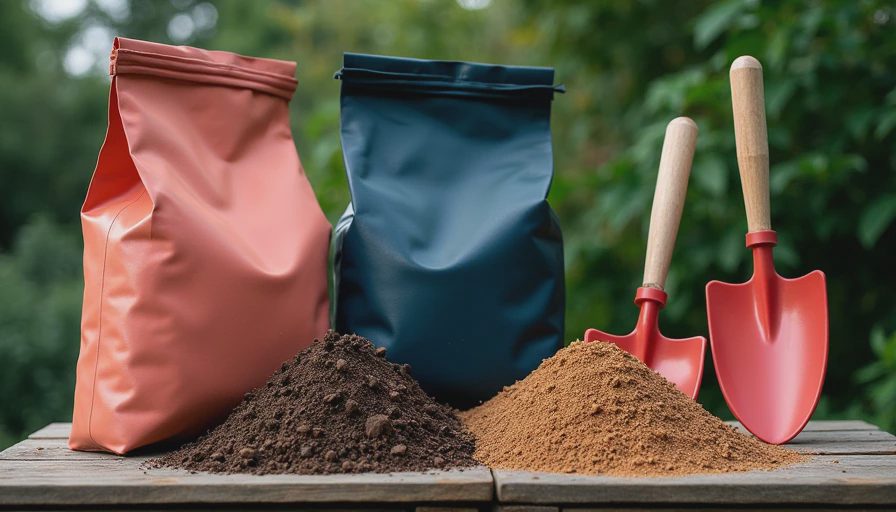
Organic matter is the single best amendment for clay soil. It improves drainage, aeration, and nutrient availability. Leaf compost, aged manure, or well-rotted wood chips all work. Spread a 2- to 3-inch layer over the planting area each fall and let earthworms work it in. Avoid peat moss — it is too acidic for many New England gardens and does little for clay structure. I have seen gardens transform after three years of consistent organic matter additions. The soil goes from dense concrete to crumbly loam. This is not a one-time fix; make it an annual habit.

The Right Way to Amend with Sand and Gypsum
A common question at the nursery is: Should I add sand to my clay? Usually, the answer is no. Clay particles are tiny and plate-like; sand grains are large and round. Mixing them can create a concrete-like texture if you do not add enough sand — at least 50% of the soil volume. That is impractical. Instead, use gypsum (calcium sulfate). Gypsum flocculates clay, causing particles to clump together and improve drainage without changing pH. Apply about 40 pounds per 1,000 square feet, water it in, and let it work over a few months. I have had good results with gypsum on the heavy clay in my Jamaica Plain community plot.
Work with Your Soil’s Natural Structure
Clay soil has a natural structure — small aggregates that can be stabilized by roots and organic matter. Avoid tilling or digging when wet; that smears the clay and destroys structure. Instead, use a broadfork or spading fork to loosen without turning. Plant deep-rooted cover crops like daikon radish or winter rye; their roots create channels for water and air. Over time, you will see the soil develop a granular, crumbly texture. This is called “tilth,” and it is the goal of any soil improvement.
Choose Plants That Thrive in Clay
Not all plants hate clay. In fact, many native New England perennials evolved in heavy soils. Coneflower (Echinacea purpurea), black-eyed Susan (Rudbeckia hirta), and switchgrass (Panicum virgatum) all handle clay well. Shrubs like winterberry (Ilex verticillata) and red twig dogwood (Cornus sericea) thrive in moist clay. Avoid plants that demand perfect drainage, such as lavender or Russian sage — I have seen too many of them die in early May after a wet spring. When you are learning how to improve clay soil for gardening, selecting the right plants reduces the need for constant amendment.
Protect Your Soil from Compaction
Once you have improved your clay soil, protect it. Avoid walking on garden beds, especially when wet. Lay down wood chip paths to distribute weight. Use raised beds for vegetables if your native clay stays soggy into June. Mulch with shredded leaves or bark to buffer rain impact and keep the soil surface from crusting. Compaction is the fastest way to undo your progress. A simple rule: if the soil sticks to your boots, stay off it.
Frequently Asked Questions About Clay Soil
Q: How long does it take to improve clay soil for gardening? A: With consistent annual additions of organic matter, you can see noticeable improvement in one to two years. Most gardeners report workable soil after three years. For example, a customer of mine on Cape Cod added 3 inches of leaf compost each fall and had friable loam by the third spring. Patience is key when learning how to improve clay soil for gardening — it is a long-term investment.
Q: Can I use vermiculite or perlite to aerate clay? A: These amendments are better for containers. In clay, they break down quickly or float to the surface. Stick to organic matter like compost or aged manure — they provide lasting structure. Products like Espoma organic compost or Coast of Maine soil blend work well for amending clay.
Q: Is it worth building raised beds instead? A: If your clay is extremely heavy or you need quick results, raised beds are a practical shortcut. Fill them with a mix of topsoil, compost, and coarse sand. A 4x8 bed costs about $50 to fill if you source materials locally. However, raised beds still require regular watering and eventual soil replenishment. They do not replace the need to improve the underlying clay.
Q: What about using a rototiller? A: Tilling can kill earthworms and break up soil structure. Use a broadfork or hand tools instead. If you must till, do it when the soil is dry and only once to incorporate organic matter — then switch to no-till methods. This preserves the improvements you have made.
Improving clay soil is not a quick project — it is a long-term commitment. But with a soil test, annual organic matter, and the right plants, you can turn heavy clay into a productive garden that gets better every season. What I planted instead of fighting my clay: native perennials and a fall cover crop. The garden keeps no secrets, and clay soil keeps no grudges — give it what it needs, and it will give back.



Letters
No letters yet — be the first to write.