The False Start
March in New England feels like spring, and that feeling is a liar. The sun comes out. The snow recedes from the south side of the house. A crocus blooms. And every gardener in the region develops an overwhelming urge to plant something right now.
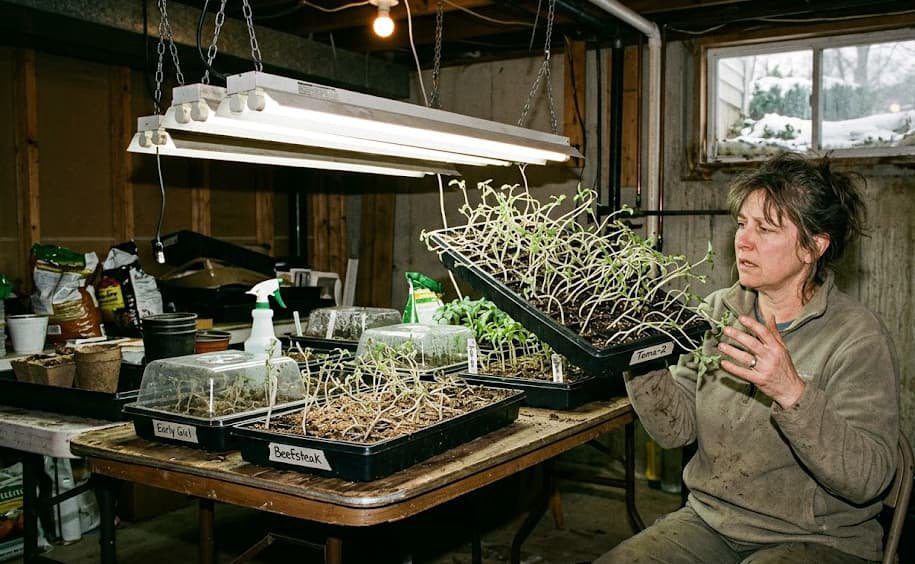
I have given in to this urge more times than I want to admit. My first year in Dorchester, I started tomatoes on March 10. By April 10, they were twelve inches tall, pale, and leaning sideways toward the window. By the time I could plant them outside in mid-May, they were a tangled yellow mess that took weeks to recover. I lost a month of growing time because I started too early. The plants that went into the garden later, smaller, and healthier from the nursery outperformed mine all summer.
Why Early Seed Starting Fails Here
Our last frost date in the Boston area is around April 30, but the soil doesn't warm up enough for warm-season crops like tomatoes and peppers until mid to late May. If you start seeds in early March, you are committing to growing plants indoors for ten to twelve weeks. Most home setups cannot sustain healthy growth for that long.
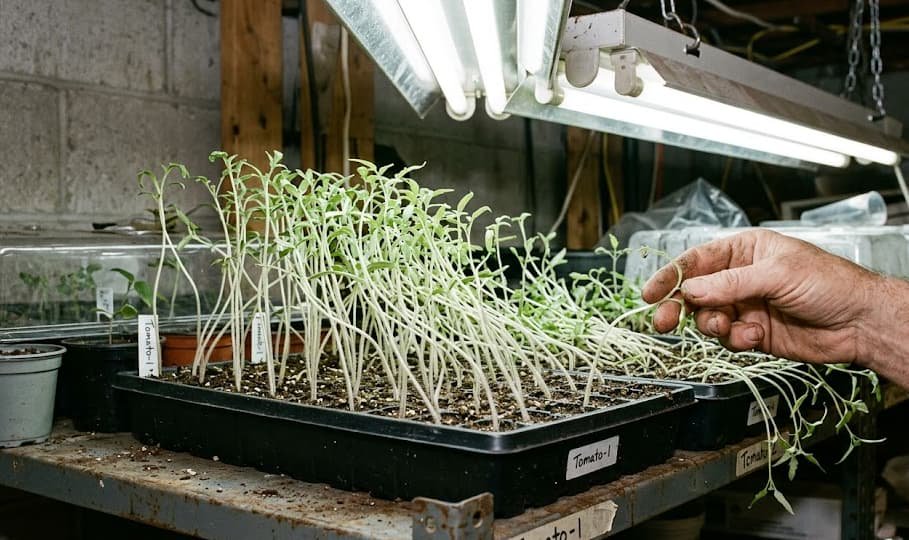
Three things go wrong. Light is the first problem. Even a south-facing window provides far less light than a cloudy day outdoors. Seedlings stretch toward the light, becoming leggy and weak. The stems elongate, the internodes stretch, and the plant never develops the sturdy structure it needs. A leggy tomato seedling will always be a leggy tomato plant.
Space is the second problem. A single seed tray works on a windowsill. Four trays need a dedicated setup with lights, shelves, and air circulation. By late April, the plants are too big for their pots, and the weather is still too cold to move them outside. You end up with a forest in your living room and no good options.
Temperature and humidity indoors are stable, which is exactly the wrong thing. Seedlings need cool nights and gentle air movement to develop strong stems. Inside a heated house in March, they grow soft and fast, and soft fast growth is the opposite of what you want.
What to Do Instead
Start cool-season crops first. Onions, leeks, and celery can start indoors in late February because they grow slowly and can handle transplanting. Broccoli, kale, and cabbage can start in mid-March because they will go into the garden in April, before the soil warms up. These crops make sense for an early start.
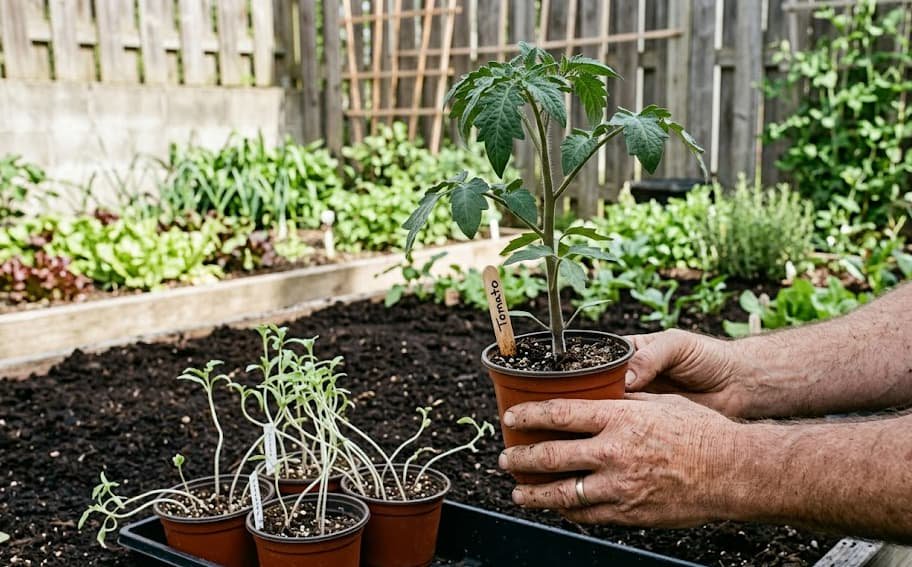
Wait on tomatoes and peppers. I start my tomatoes on April 10 now, not March 10. That gives me six weeks of indoor growth before transplant, which is plenty. The plants go into the garden at eight to ten inches tall, dark green, with stems as thick as a pencil. They are smaller on planting day than the early-started ones were, but they are healthier, and they catch up within two weeks.
Peppers start a week earlier than tomatoes because they grow more slowly. I seed peppers around April 1. Eggplants are the same.
Wait even longer on squash, cucumbers, and melons. These grow fast and resent transplanting. Start them indoors no more than three weeks before transplant, which means late April or early May. Better yet, direct-seed them once the soil warms up in late May. A squash direct-seeded on May 20 will outgrow a squash started indoors on April 20 and transplanted. Every time.
If You Must Start Early
Build a real setup. Two fluorescent shop lights or LED grow lights per shelf, hung on chains so you can raise them as the plants grow. Keep the lights an inch above the seedlings. A fan running on low for a few hours a day strengthens stems. Cooler night temperatures — 55 to 60 degrees — keep growth compact.
Pot up seedlings when they outgrow their cells. Move them to four-inch pots before they get rootbound. Use a potting mix that drains well, not garden soil. And harden them off properly: a week of gradual exposure to outdoor conditions before you plant them in the ground. Even then, wait until the soil is warm. The calendar matters less than the soil temperature.
What You Can Do Outside in March
You can prune fruit trees and small fruits while they are still dormant. You can cut back ornamental grasses and old perennial stems you left standing for winter, but only after the temperature has been above 50 for a few days so any overwintering pollinators have emerged. You can spread compost on vegetable beds, but only if the soil is dry enough not to compact under your feet. You can check your tools and sharpen your pruners.
What you should not do is work wet soil, uncover plants too early, or put anything tender in the ground. March is for preparation. April is for cool-season planting. May is for tomatoes.
The garden is not going anywhere. The snow will melt. The soil will warm. The impatient part of you that wants to plant something right now is the same part that will be frustrated in June when the seedlings you coddled for three months are struggling and the ones your neighbor bought at the nursery are already setting fruit. Wait two weeks. Then wait one more. The plants will thank you.
Letters
No letters yet — be the first to write.