The Weed You Should Pull and Eat
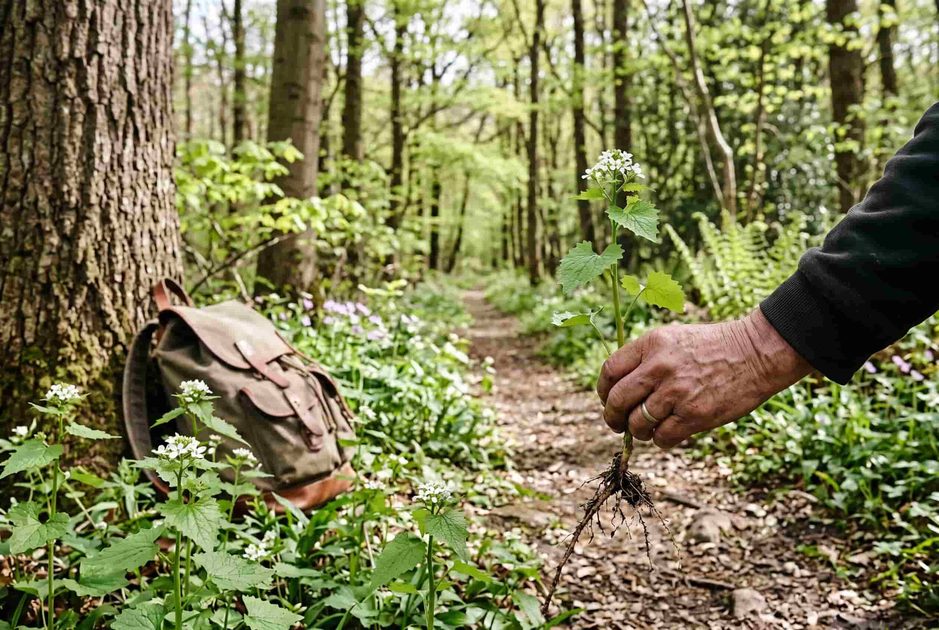
I first noticed garlic mustard on a section of the Appalachian Trail near Hanover, New Hampshire. It was May, and the trailside was carpeted with a knee-high plant I didn't recognize. I pulled one, crushed a leaf, and smelled garlic. I pulled another and tasted it. Sharp, peppery, unmistakably allium-like, but not quite garlic. I stuffed a bagful into my pack and cooked it over a camp stove that night.
What I didn't know then was that I was eating one of the worst invasive plants in New England. Garlic mustard spreads through forest understories, displaces native wildflowers, and secretes chemicals from its roots that kill the soil fungi native trees need to survive. Pulling it is conservation. Eating it is the reward.
How to Identify It with Certainty
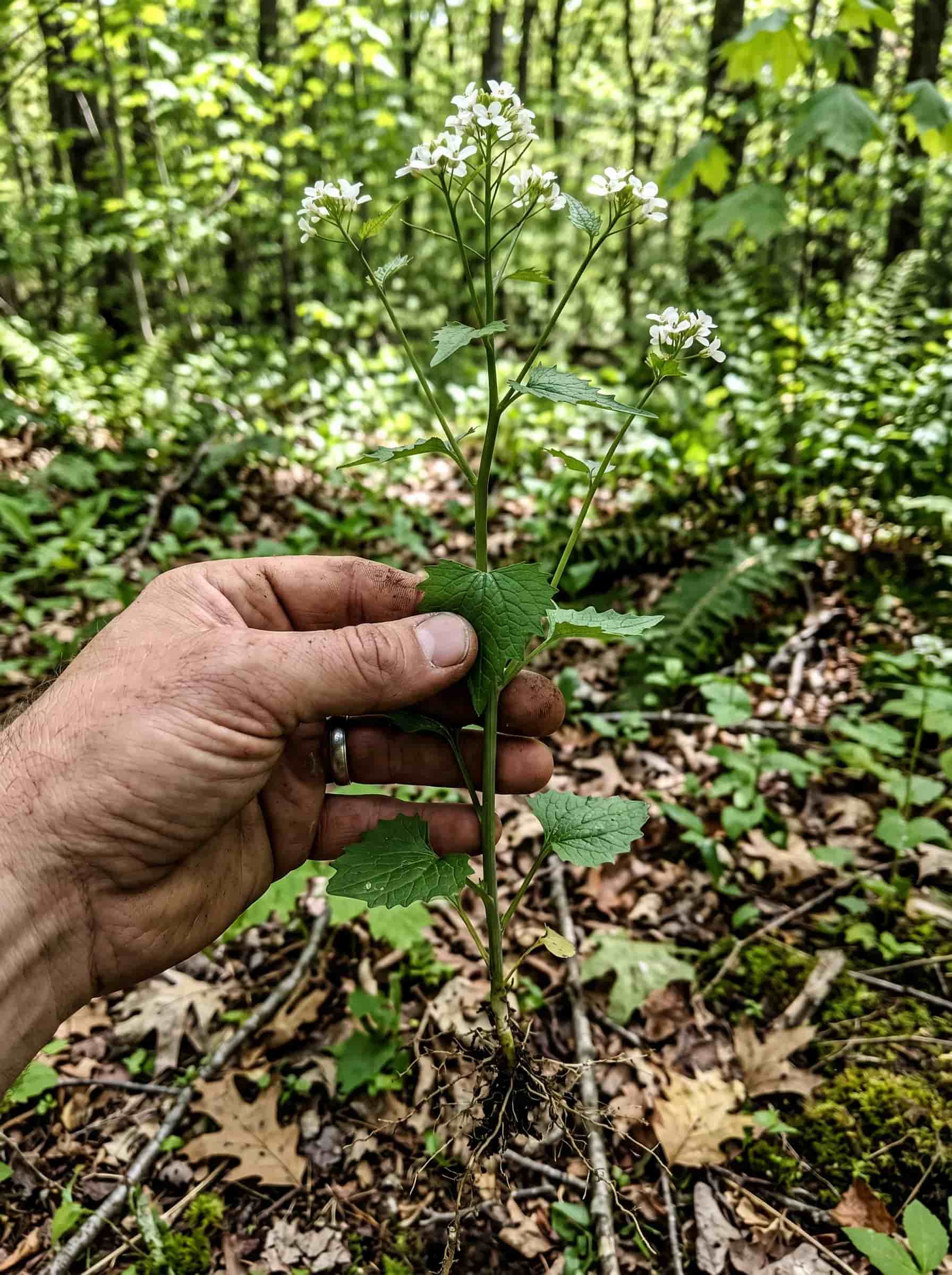
Garlic mustard is a biennial. First-year plants form low rosettes of kidney-shaped leaves with scalloped edges. They stay green through winter, which is why you can find them in March before anything else leafs out. Second-year plants send up flower stalks in April and May, growing one to three feet tall, with triangular leaves that are sharply toothed. The flowers are small, white, with four petals arranged in a cross — the classic mustard family signature. Crush any part of the plant and it smells distinctly of garlic.
There are no toxic lookalikes in New England that smell like garlic when crushed. That said, do not eat anything you cannot identify with certainty. The garlic smell is your confirmation. If it doesn't smell like garlic, it isn't garlic mustard.
When and How to Harvest
Harvest second-year plants in spring, before the flowers fully open and while the stems are still tender. The window is April through early June in most of New England. First-year rosettes are edible year-round but are more bitter in summer.
Pull the entire plant, roots included. This is not a cut-and-come-again crop. You want to remove it completely from the soil to prevent it from setting seed. A single plant produces hundreds of seeds that remain viable for years. Put the plants in a sealed bag in your pack. Do not leave pulled plants on the trail — they can still set seed from stored energy.
Harvest only from areas you know have not been sprayed with herbicide. Avoid roadsides where runoff or vehicle exhaust contaminate the plants. State parks and conservation lands often welcome garlic mustard removal, but check local regulations before harvesting on public land.
One Meal Worth Making
The leaves are the most useful part. Young leaves from second-year plants are mild enough for salad, with a flavor between garlic and bitter green. Older leaves and first-year rosettes are better cooked.
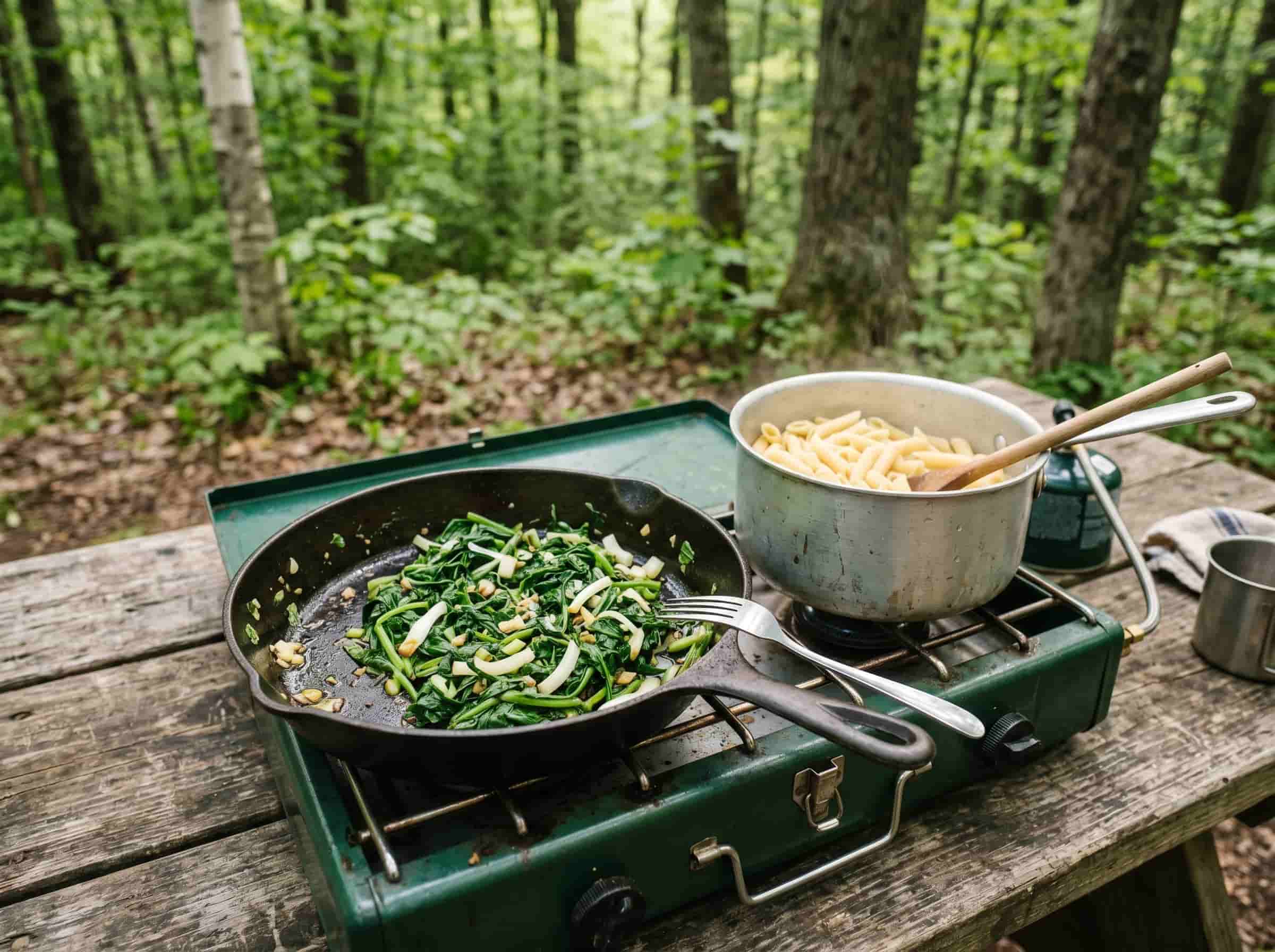
My camp dinner that night was simple, and I still make it at home. Heat olive oil in a pan. Add chopped garlic mustard leaves and stems, a handful of trail-foraged ramps if you find them, and cook until wilted. Toss with pasta, salt, and hard cheese. The garlic mustard mellows with heat and gives you a green that tastes like something between spinach and aioli. It works in pesto too — blanch the leaves briefly, then blend with olive oil, nuts, and parmesan.
The roots are edible and taste like horseradish. I grate them into vinegar for a quick condiment. The seeds can be collected when the long narrow pods turn brown in summer and used like mustard seed.
Why Eating It Matters
Garlic mustard is not going away. It spreads by seed and by soil disturbance, and our deer population avoids eating it, which gives it a competitive advantage over native plants that deer browse heavily. Pulling it reduces the seed bank. Eating it makes the work worth doing.
I now carry an extra bag in my hiking pack during April and May. I pull garlic mustard when I see it, even if I am not planning to cook that night. I leave the plants bagged in my car and deal with them at home. If they are too far gone to eat, they go into the municipal yard waste bin — not my compost, which doesn't get hot enough to kill the seeds.
Next time you are on a trail and see a patch of white flowers with the scent of garlic, pull some. You will not fix the invasion by yourself. But you will eat well, learn a plant, and leave the woods slightly better than you found them.
Letters
No letters yet — be the first to write.