The Clock Is Real
By mid-November in New England, the garden is not asking for much. It's asking for the last few things that matter before the snow buries everything and the ground locks up until March. I have done too much in November and regretted the time I lost. I have done too little and regretted the damage I found in spring. What follows is the list I've settled on after years of trial — the things that actually prevent loss.
Bulbs, Mulch, and the Last Planting
If you still have spring bulbs sitting in a paper bag, plant them now. The ground is cold but rarely frozen solid before Thanksgiving, and bulbs planted in cold soil rot less than bulbs planted in warm September soil. Plant them at the full recommended depth — no shallower. Squirrels are hungry and determined in November, so cover the planted area with a layer of chicken wire or a thick mulch of shredded leaves to hide your work.
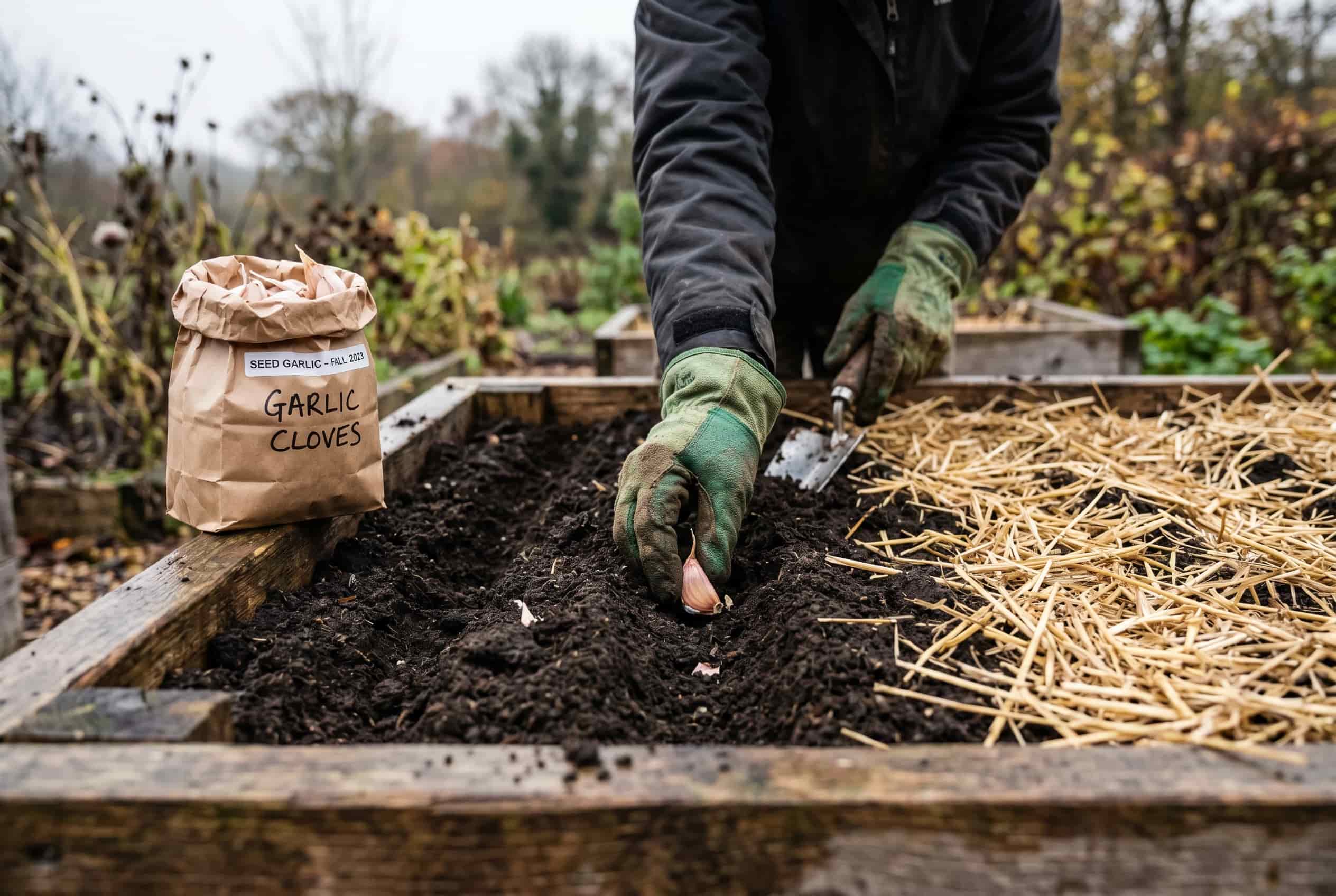
This is also the last call for garlic. I plant mine in the first two weeks of November, pushing cloves into well-drained soil and covering them with four inches of straw. Too early and they sprout too tall before winter. Too late and the ground is frozen. If your soil is already workable, do it this weekend.
Final mulch goes down now. Not for warmth — for temperature stability. Bare soil in New England winter heaves with every freeze-thaw cycle, and that heaving pushes perennials and bulbs right out of the ground. Two to three inches of shredded leaves, straw, or salt marsh hay locks the soil temperature steady. Apply after the ground has cooled but before the first lasting snow.
Protect What Winter Breaks
Wet snow is heavy. It splits shrubs, flattens grasses, and snaps branches. I do one structural walk-through before the first storm.
Wrap upright arborvitae and junipers with twine in a loose spiral from bottom to top. The twine holds the branches together so snow slides off instead of collecting and pulling them apart. I learned this after losing half an arborvitae to a wet December storm.
Knock any remaining leaves out of the crowns of perennials and small shrubs. A mat of wet leaves sitting on a plant crown all winter is a rot invitation. Use your hands, not a rake — you want to remove the leaves without damaging dormant buds.
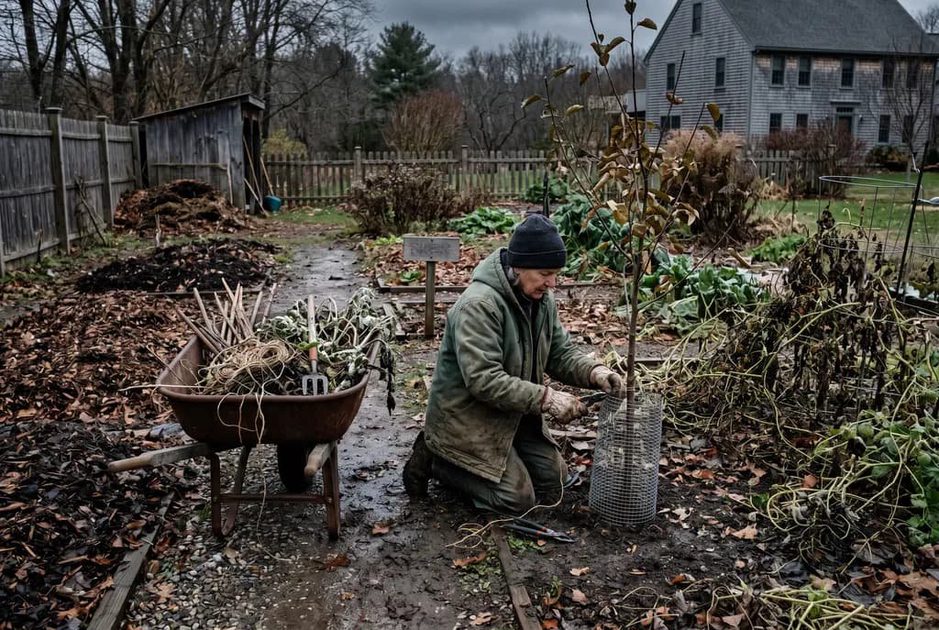
Wrap the trunks of young trees and shrubs with hardware cloth or plastic tree guards to protect against rodent damage. Voles and rabbits chew bark when other food is gone, and a girdled trunk is dead by spring. The guard should go from the soil surface to above the snow line — eighteen inches is usually enough in Boston.
The Tool Ritual
I care for my tools in November because March is wet, cold, and I want to plant, not scrape rust.
Drain every hose completely. Disconnect them from the spigot. Coil them loosely and store them in the shed or basement. Water left in a hose freezes, expands, and splits the lining. I have lost three hoses to my own laziness. Each one cost forty dollars or more.
Shut off outdoor water from the interior valve and open the exterior spigot to drain. If you have a frost-free hydrant, you are probably fine. If you have a standard spigot and leave a hose connected, the water trapped against the valve freezes and cracks the pipe inside the wall. That is a plumbing bill in March.
Clean your pruners, loppers, and shovels. Scrape off dried sap and soil with a wire brush. Wipe the blades with an oily rag. Store them dry. Wooden handles get a light coat of linseed oil. This takes twenty minutes and it buys years.
The Final Walk
I do one last walk around my garden before I accept that the season is over. I carry a notebook. I write down what worked, what didn't, and what I want to change. The notes I take in November are always clearer than the notes I take in July. In July, I'm reacting. In November, I'm reflecting.
I note which plants flopped and needed staking. I note which bed drained poorly in spring because I didn't regrade it. I note which vegetable variety produced and which one I won't grow again. That notebook goes on my desk through winter and becomes next year's garden plan.
What Not to Do Now
Do not prune spring-flowering shrubs. Their buds are set. Do not fertilize anything. Do not cut back every perennial — some stems protect the crowns. And do not leave terra cotta pots outside. They absorb water, freeze, and crack. Move them to a shed or wrap them.
The snow is coming. Do the things that prevent damage, put the garden to bed with a clean conscience, and rest. The garden will wait.
Letters
No letters yet — be the first to write.