The Lawn Advice That Fails Here
New England homeowners spend more money on lawn products than almost any other garden input, and a depressing amount of it is wasted. The national lawn care brands sell a formula: apply this in spring, this in summer, this in fall, and your grass will be thick and green. It works in Ohio and Pennsylvania. It often fails here.
Our soils are different. Our grass species struggle through our summers. Our winters kill cultivars that survive in New Jersey. I have watched neighbors spread lime, fertilizer, and seed every spring and still have a lawn that looks embarrassed by August.
The problem is almost never what the bag assumes. It is usually one of three things: soil that has been compacted into something closer to concrete, a pH that locks nutrients away, or a grass type that cannot handle New England's particular combination of wet winters and dry summers. Fix those, and your lawn might surprise you. Ignore them, and you will keep buying products that don't work.
Compaction: The Silent Lawn Killer
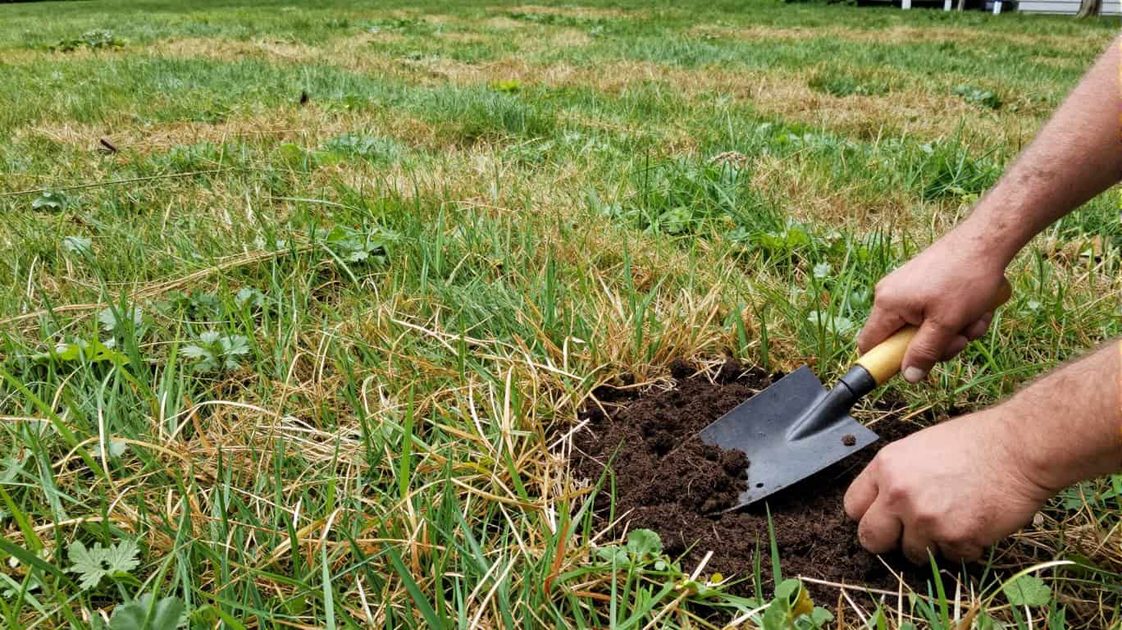
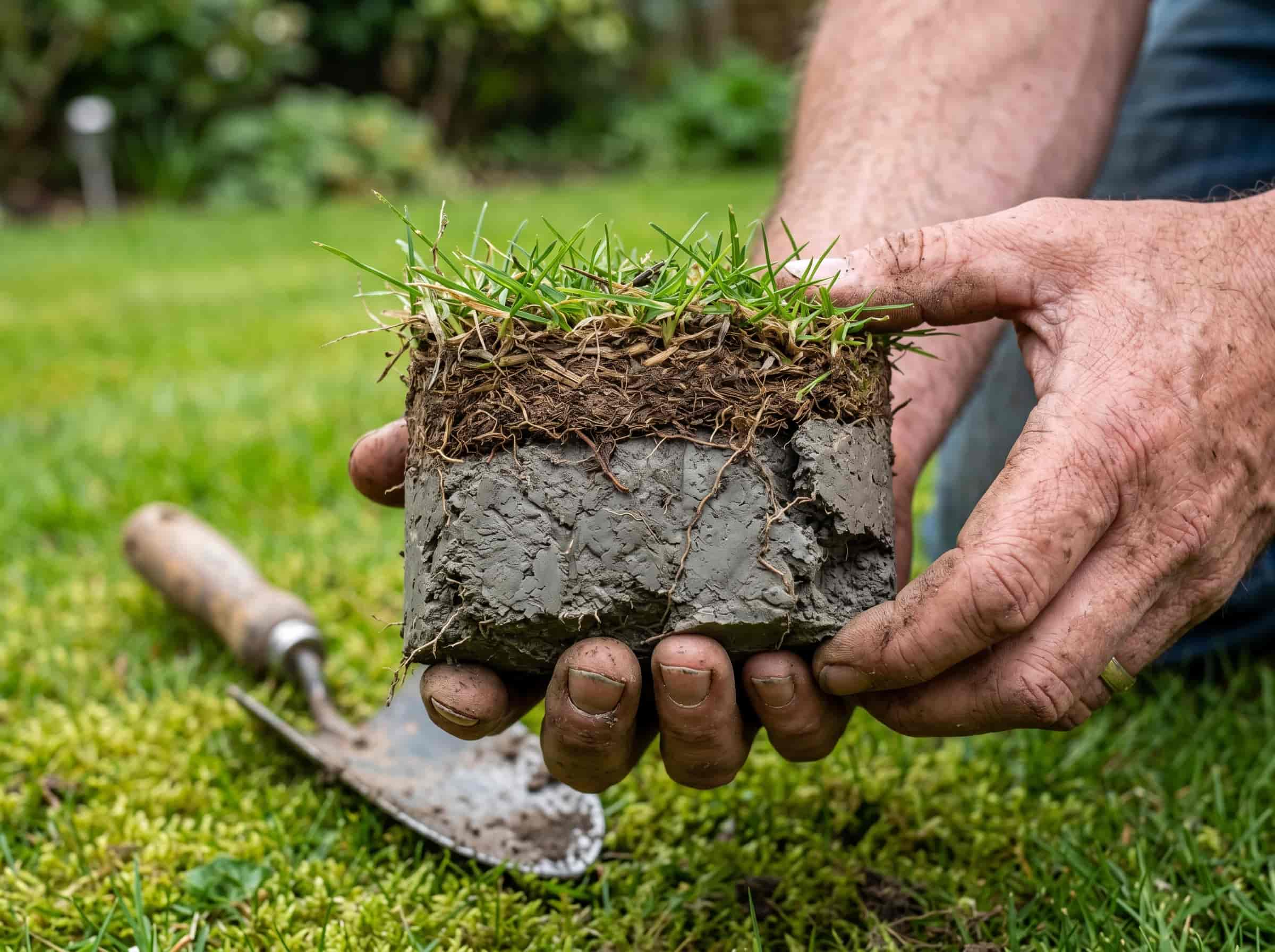
Most New England lawns sit on soil that was compacted during construction and never addressed afterward. Every footstep, every mower pass, every rainfall over years packs the soil tighter. The pore spaces that hold air and water collapse. Roots suffocate. Water runs off instead of infiltrating.
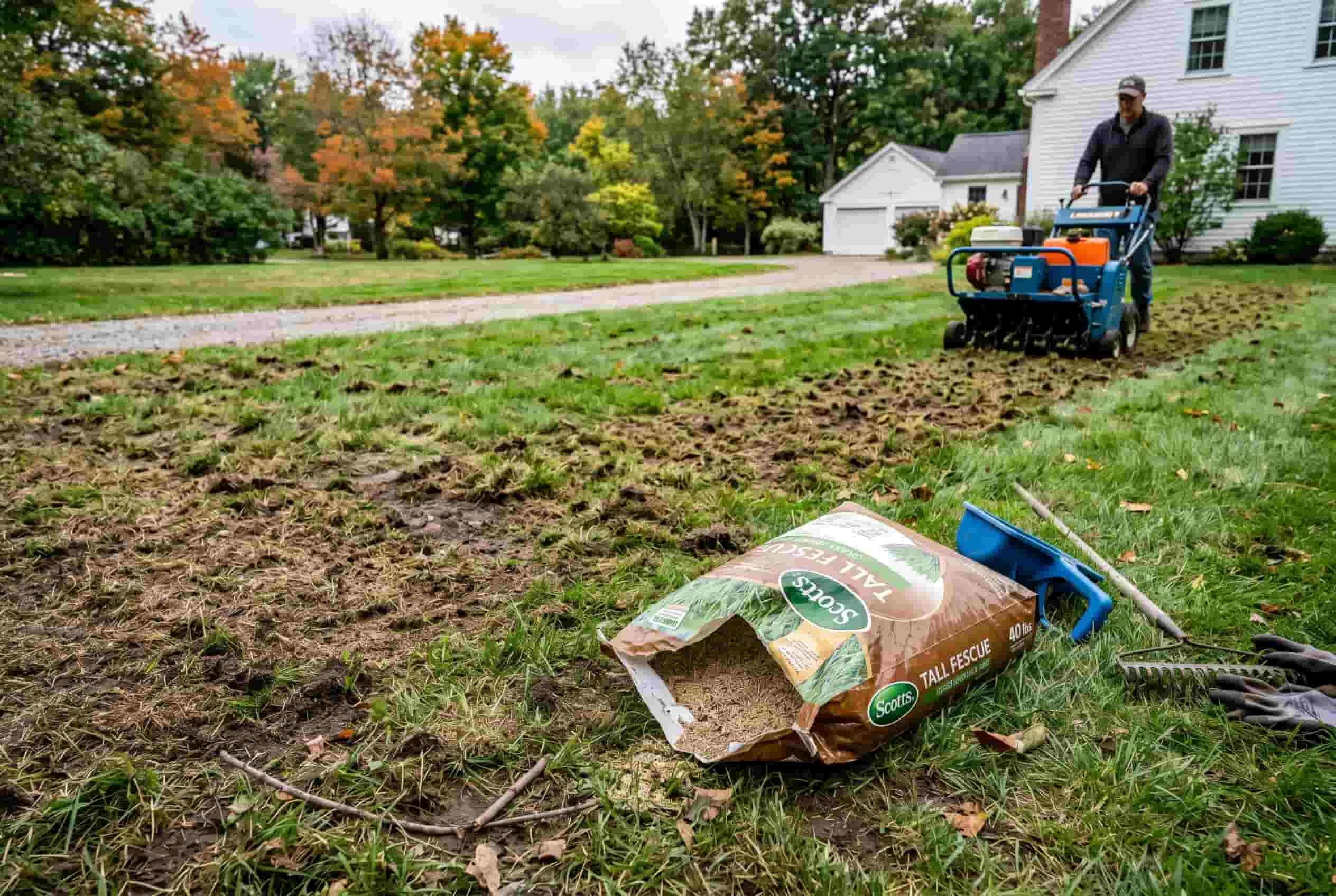
You can diagnose compaction without any special tools. Push a screwdriver into your lawn in several spots. If it slides in easily to six inches, your soil is open enough. If it stops at two inches or you have to force it, your lawn is compacted. Core aeration is the fix. A core aerator pulls actual plugs of soil out of the lawn, creating channels for air, water, and roots. It's the single most effective thing you can do for a struggling lawn in our clay soils.
Do it in early fall, not spring. Fall aeration gives roots the cool, moist growing season they need to recover. Spring aeration opens channels for weed seeds at exactly the moment they are germinating. Rent a machine from a local equipment yard, or hire someone with a commercial unit. Skip the spike aerators sold at hardware stores — they push soil sideways, making compaction worse at the bottom of each hole.
Thatch, pH, and the Fertilizer Cycle
Thatch is a layer of dead stems and roots between the green grass and the soil surface. A half-inch is normal and beneficial. More than an inch blocks water, harbors disease, and keeps roots from reaching soil. If you have a thick, spongy layer when you cut into the turf, you have a thatch problem. Core aeration addresses it. So does raking aggressively with a metal lawn rake in fall.
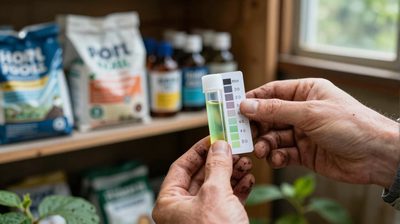
Soil pH is the second thing most lawn programs miss. In New England, our soils are naturally acidic. Grass grows best at pH 6.0 to 7.0. Below 5.5, nutrient availability drops sharply. You can apply fertilizer, but if the pH is too low, the grass can't access it. Get a soil test from UMass before you spend money on any lawn product. If your pH is below 6.0, lime is the first thing to apply. It takes months to work, so fall is the right time.
If your pH is in range and your soil is aerated, then consider fertilizer. New England lawns do best with slow-release organic nitrogen applied in fall. A September application of compost or a low-number organic lawn fertilizer feeds roots through the cool growing season. Spring nitrogen forces lush top growth at the expense of roots, which leaves the grass vulnerable when summer heat arrives. I fertilize once a year, in September, with compost spread a quarter-inch thick.
The Wrong Grass for the Wrong Climate
Kentucky bluegrass is the default lawn grass in much of America. It struggles in New England. It wants cool summers and reliable moisture. Our summers are humid, our dry spells are real, and bluegrass in full sun without irrigation goes dormant and brown by July.
Tall fescue is a better choice for most New England lawns. It roots deeper, tolerates heat and drought, and stays green longer into summer without water. It also handles our clay soils better. The newer turf-type tall fescues are finer-bladed than the old pasture types and look good at mowing height.
Fine fescues — creeping red fescue, chewings fescue, hard fescue — are even tougher and more shade-tolerant. They are the right grass for dry shade under trees, where nothing else will grow. Mix them with tall fescue in sunny areas for a lawn that handles New England conditions without constant intervention.
If you overseed, do it in late August or early September. The soil is warm, the nights are cool, and fall rains help with establishment. Spring seeding is a gamble — the seedlings must survive the summer heat before their roots are deep enough, and most don't.
What to Do and What to Skip
Do core aeration in fall if your soil is compacted. Do a soil test and add lime if your pH is low. Do overseed with tall fescue or fine fescue in early fall, not spring. Do apply compost or slow-release organic fertilizer once, in September. Do leave the clippings — they return nitrogen to the soil and do not cause thatch. Do mow high: three to three and a half inches shades the soil, conserves moisture, and reduces weed germination.
Skip the spring fertilizer. Skip the weed-and-feed products that combine fertilizer and herbicide — they apply both at the wrong time for at least one of them. Skip the pesticide treatments unless you have identified a specific pest at a threshold that warrants intervention. A healthy lawn outcompetes most weeds and recovers from most damage on its own.
And if you have a spot where grass will not grow despite all of this, stop fighting it. I have a strip under my maple where grass has failed four times. This fall, I am planting it to native sedges and ferns and letting it be something else. A lawn is not a moral requirement. It is a groundcover. If another groundcover works better in a spot, use it.
Letters
No letters yet — be the first to write.