The first McIntosh of the season is a Massachusetts rite of passage. But when you're choosing what to plant, the best apple trees for Massachusetts go beyond that classic variety. Whether you have a backyard in the Berkshires or a community plot on the Cape, these trees are bred for our specific conditions: cold winters, humid summers, and the persistent threat of apple scab. Here's what I've learned after six seasons of sourcing and planting across the state.
Understanding Massachusetts Growing Conditions
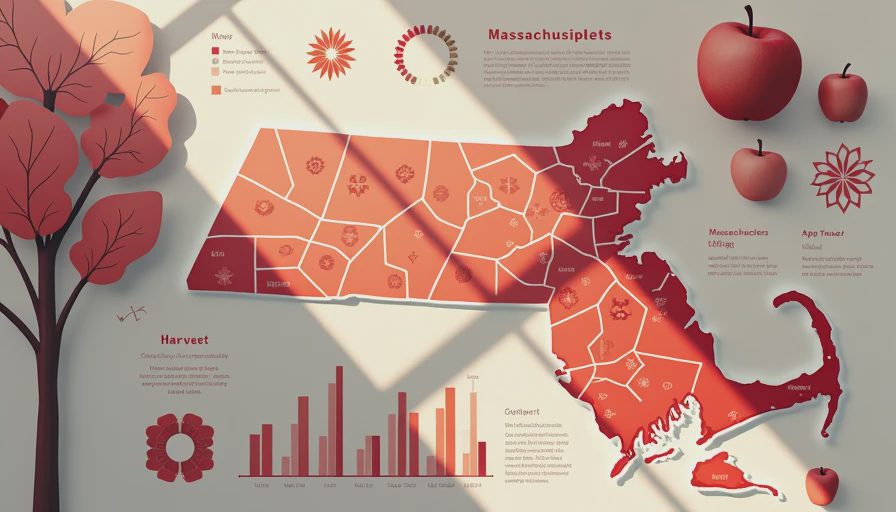
Massachusetts spans USDA zones 5b (northern Berkshires) to 7a (coastal Cape Cod and the Islands). That means winter lows from -15°F to 5°F. Most apple trees need 800–1,000 chill hours (time below 45°F) to set fruit. Our state delivers that, but the real challenge is summer humidity, which fuels fungal diseases like apple scab and fire blight. Soil pH should be 6.0–6.8; test before planting. I've seen too many homeowners sink money into Honeycrisp on unamended clay, only to watch it decline in two years. Matching the tree to your microclimate is the first step.
Top Apple Trees for Massachusetts
Liberty
Liberty is the workhorse of disease-resistant apples. Bred at Cornell's Geneva station, it shrugs off apple scab, cedar-apple rust, and fire blight. The fruit is mildly tart, excellent for eating fresh or pressing into cider. It ripens in late September and stores well into December. I've planted Liberty in heavy clay and sandy loam—it adapts. Dwarf on M.9 rootstock reaches about 8 feet, easy for a small yard.
Empire
Empire is a McIntosh x Red Delicious cross that combines McIntosh's flavor with Red Delicious' storage life. It's scab-resistant but prone to fire blight in wet springs, so plant in a well-drained site with good air circulation. Fruits are medium-sized, crisp, and perfect for lunchboxes. It needs a pollinator like Liberty or Cortland. For Massachusetts, Empire is a reliable mid-October harvester.
Honeycrisp
Yes, Honeycrisp. It's finicky—requires biennial bearing management, thin fruit heavily, and dislikes hot, humid summers—but the texture and sweetness are unmatched. In Massachusetts, plant on B.9 or G.11 rootstock to control vigor. Water during dry spells to prevent bitter pit. You'll get fruit in late September. Is it worth the effort? For a few trees, absolutely. For a full orchard, consider other varieties.
Macoun
Macoun is the McIntosh relative that doesn't turn to sauce the minute you pick it. Firm, aromatic, with a wine-like flavor. It's susceptible to scab, so spray preventatively with sulfur or choose a scab-resistant selection if available. Ripens in late September to early October. Massachusetts orchards grow Macoun for a reason—it thrives here.
Cortland
Cortland is another McIntosh descendant; its white flesh resists browning, making it ideal for salads and cheese plates. It's moderately scab-resistant and sets heavy crops that require thinning. Tree is spreading, so give it 15 feet of space on semi-dwarf rootstock. Best for northern and central Massachusetts.
Enterprise
Enterprise is a late-season keeper bred for disease resistance and long storage. Fruits are tough-skinned, tart, and sweeten in storage by January. It's immune to scab and resists fire blight and cedar-apple rust. Ripens in October. I recommend Enterprise for organic growers or anyone who doesn't want to spray.
Planting and Care Tips for Success
First, order bare-root trees from a reputable New England nursery (like Fedco or Adams County Nursery) in early spring. Plant as soon as the ground thaws. Dig a hole twice as wide as the root ball, but only as deep. Spread roots over a mound of composted soil. Water deeply weekly for the first season. Prune to a central leader in early March. For pollination, plant at least two different varieties that bloom simultaneously. Liberty, Empire, and Cortland all overlap in mid-spring. Mulch with wood chips, but keep them 6 inches away from the trunk to prevent voles and rot.
What I Planted Instead
I spent two seasons babying a Honeycrisp on M.26 rootstock in a friend's suburban yard. It cropped beautifully the third year, then fire blight took half the scaffold limbs. I should have planted Liberty or a disease-resistant cross on a more vigorous rootstock. So I replaced it with an Enterprise. That tree is now four years old, hasn't been sprayed once, and last fall gave us 15 pounds of storage apples. The lesson: prioritize genetics over hype. Massachusetts summers reward trees bred for humidity.
Pollination Partners: Which Trees to Plant Together
Most apple trees need cross-pollination. In Massachusetts, bloom times vary from early (Crabapples, Liberty) to late (Granny Smith can be tricky). For a small yard, plant two varieties that flower at the same time. Liberty and Empire bloom mid-season and overlap well. Cortland and Macoun also sync. Honeycrisp is a diploid that pollinates most others but sets better with a second variety. Crabapples like 'Snowdrift' or 'Manchurian' are excellent pollen donors. If you have only space for one tree, consider a self-fertile variety like Golden Delicious — but even it sets more fruit with a partner. When selecting the best apple trees for Massachusetts, choose at least two from the same bloom group. For example, Liberty (mid-bloom) pairs with Empire (mid) and Cortland (mid-late). Macoun (mid) pairs with Honeycrisp (mid). This ensures a consistent harvest and better fruit set. Bloom groups are generally categorized as early, mid, and late season. In Massachusetts, mid-season bloom (late April to early May) is most common. Early bloomers risk frost damage; late bloomers may not ripen fully before frost. For reliable pollination, stick with mid-season varieties. Liberty blooms mid, Empire mid, Cortland mid-late, Macoun mid, Honeycrisp mid. Plant any two from this list and you'll have pollen overlap.
Final Thoughts
Planting apple trees is a long-term relationship. The best apple trees for Massachusetts are the ones that match your soil, your tolerance for spraying, and your taste preferences. Start with Liberty, Empire, and a Honeycrisp if you're feeling ambitious. Your grandchildren will thank you.
Letters
No letters yet — be the first to write.