What I Got Wrong First
I built my first compost pile with enthusiasm and almost no understanding. I threw in everything — kitchen scraps, weeds gone to seed, whole branches, a rotting pumpkin from Halloween. I never turned it. I expected black gold by spring.
What I got was a cold, slimy, anaerobic mat that smelled like ammonia and attracted every raccoon in a three-block radius. I called it a failure. Looking back, it was the best lesson I could have asked for. Composting is forgiving, but it is not magic. A few simple principles make the difference between a pile that rots and a pile that cooks.
What Actually Goes In — And What Stays Out
Forget memorizing carbon-to-nitrogen ratios to two decimal places. Here is what you need to know. Browns are your carbon source — dry, dead, brown material. Greens are your nitrogen source — fresh, moist, recently living material. You need roughly twice as much brown as green by volume. That's it. That's the ratio.
Browns include fallen leaves, shredded newspaper, cardboard torn into small pieces, straw, sawdust from untreated wood, and dead plant stems. I save my fall leaves in contractor bags and use them all year. They are free, they are carbon, and they work better than anything I could buy.
Greens include fruit and vegetable scraps, coffee grounds, tea bags, fresh grass clippings in thin layers, and spent garden plants that haven't gone to seed. I keep a small covered bin on my kitchen counter and empty it every two days.
What stays out: meat, bones, dairy, oils, and cooked food with salt or fat. These attract rats, which is a problem in an urban backyard like mine. Also leave out weeds with mature seed heads and diseased plant material. A cold pile will not kill either one, and you will spread problems through your garden next spring. Dog and cat waste stay out too — too many pathogens.
How to Build a Pile That Heats Up
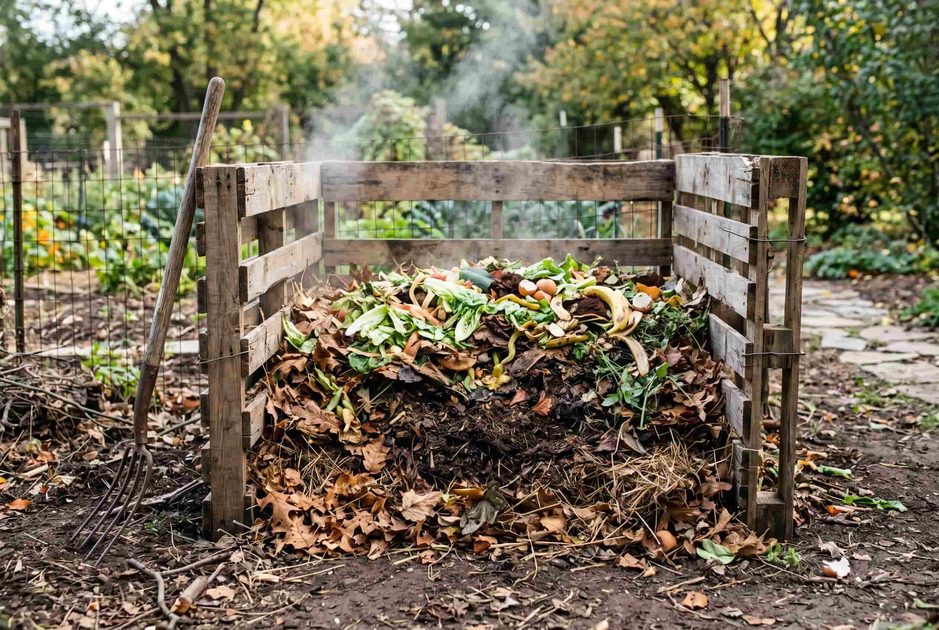
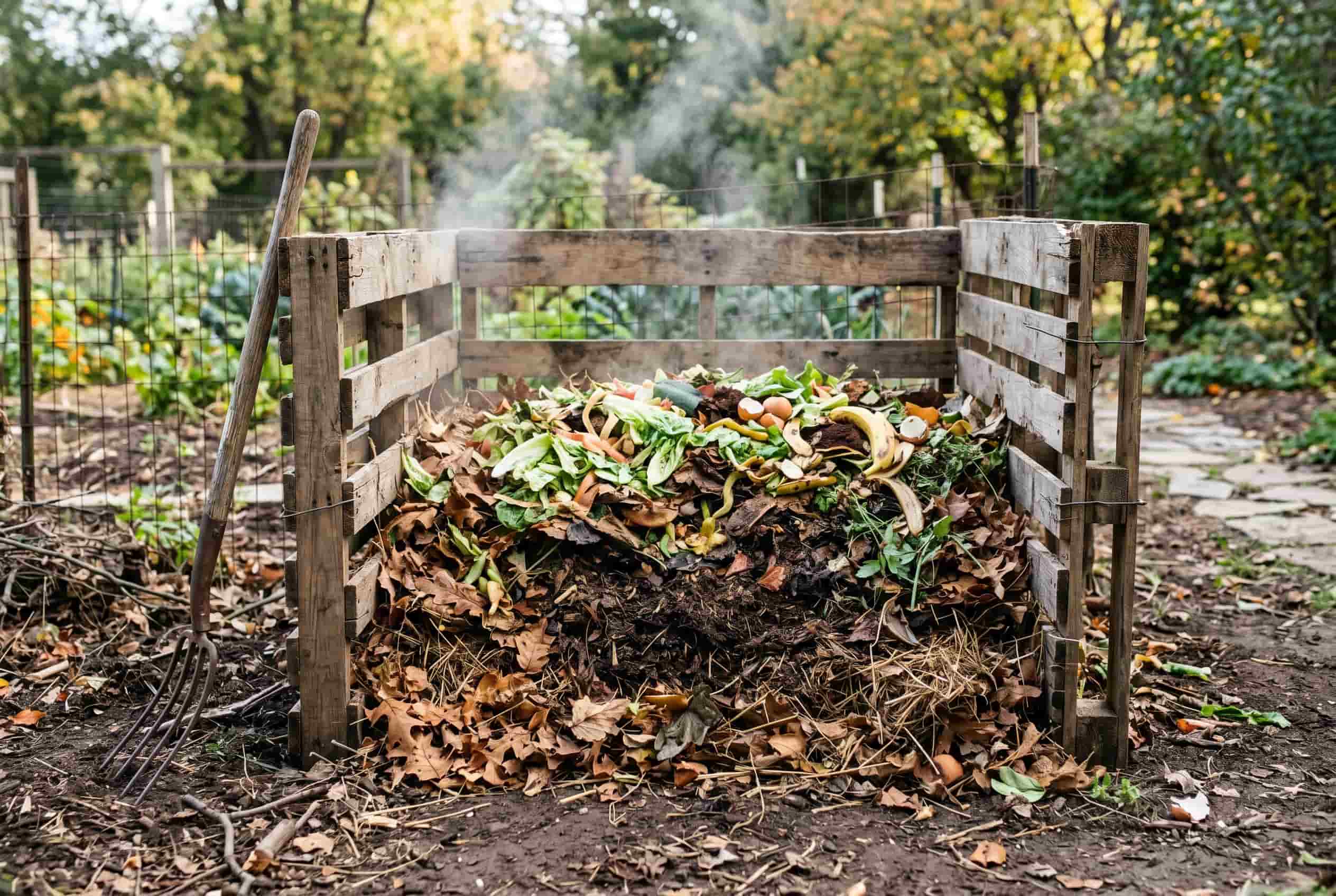
You do not need a tumbler, a bin, or any structure at all. A freestanding pile on bare ground works. I use three wooden pallets wired together into an open-front bay, which cost me nothing. The key is not the container. The key is building the pile all at once.
Save your materials until you have enough to fill the bin to at least three feet high and three feet wide. That is the minimum mass for microbial activity to generate real heat. Layer browns and greens like lasagna — four to six inches of browns, then two to three inches of greens, then repeat. Sprinkle each layer with water as you go. The pile should feel as damp as a wrung-out sponge.
When the pile is built, leave it alone for four days. Check for heat by pushing your hand into the center. If it is warm — ideally 130 to 150 degrees Fahrenheit, though I have never measured with a thermometer — it is working. After the first week, turn the pile with a pitchfork every seven to ten days. Move the outer material to the center, where the heat is. This oxygenates the microbes and speeds decomposition.
What If It's Not Working
Sometimes a pile stays cold. This happens. Do not scrap it and do not buy a compost activator in a bottle.
If the pile is cold and dry, add water. If it is cold and wet and smells sour, it is anaerobic — too much green, not enough brown, and no oxygen. Turn it thoroughly, add shredded leaves or torn cardboard, and let it breathe. If it has attracted flies, you left food scraps exposed on top. Bury them under browns next time. If it has attracted rodents, something meaty or fatty got in. Remove it and cover fresh additions with a layer of brown material.
A pile that is not heating up is still composting. It will just take longer — six to twelve months instead of three to four. That is fine. Cold compost still becomes soil. It will not kill weed seeds or pathogens, so be careful what you add, but the end product is still rich organic matter.
When Is It Done
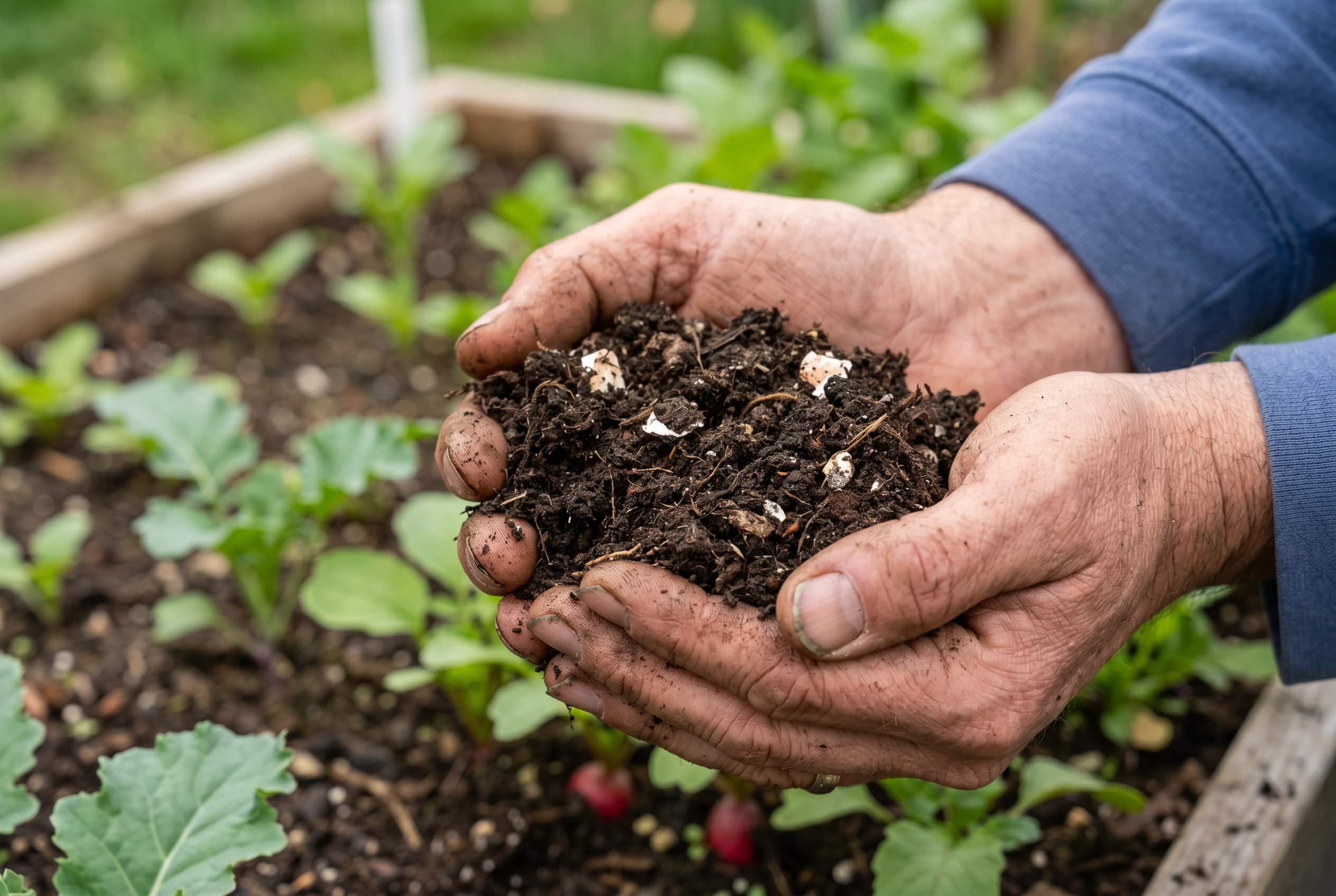
Finished compost is dark brown, crumbly, and smells like forest floor after rain. You should not be able to identify the original ingredients. If you see eggshells or small sticks, that is fine — sift them out or leave them in.
I use my compost as a two-inch top-dressing on garden beds in spring and fall. I work it into the top few inches of soil, not deep. Worms and soil life incorporate it the rest of the way. I also mix it into potting soil for containers at about one-third compost to two-thirds soil. It holds moisture and releases nutrients slowly, which is exactly what New England clay soil needs.
The Real Secret
The real secret to composting is that almost everything you do wrong will eventually fix itself. A pile left alone for a year will decompose. A pile that dried out will rewet in the rain. A pile that got too wet will dry out when the rain stops. Nature wants to break things down. You are not running a laboratory; you are creating conditions and letting organisms do their job.
Start your pile this weekend. Throw in your vegetable scraps, a bag of leaves, and some water. Turn it when you remember. By next spring, you will have compost. It will not be perfect. It will be yours, and it will improve your soil more than anything you can buy.
Letters
No letters yet — be the first to write.