The Hose Graveyard
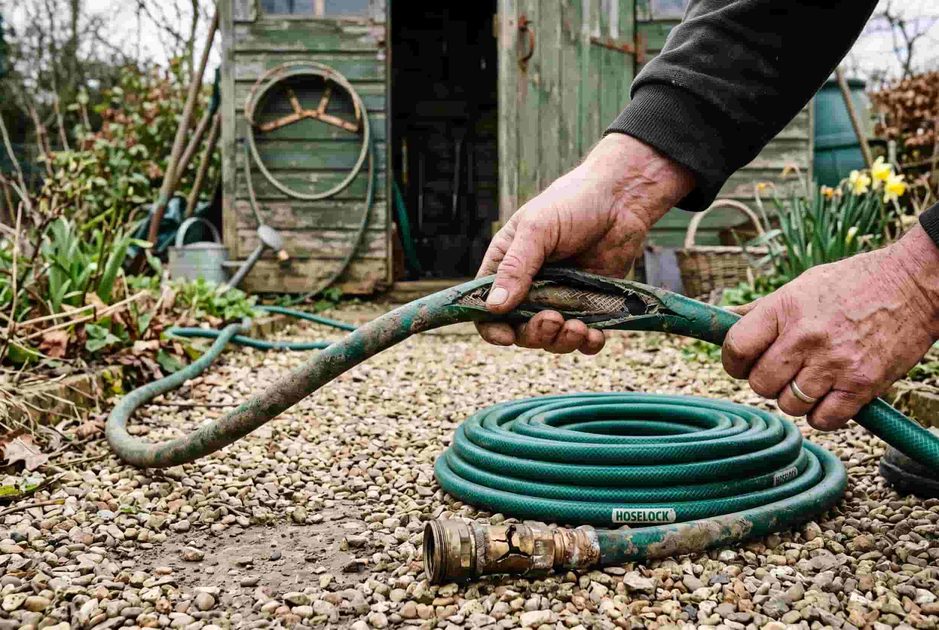
I have a shelf in my shed stacked with dead hoses. I kept them because I was annoyed. Each one represented forty or fifty dollars I had spent, used for a season or two, and then ruined because I forgot to drain it before a hard freeze. The split casings, the cracked brass, the kinks that became permanent — every spring I would drag them out and add another to the pile.
Two winters ago, I decided to stop feeling guilty and start learning something. I bought four hoses, used them all season, left them all outside through a full New England winter without draining them, and recorded what happened. No manufacturer sent these. This was my own test, paid for with my own money, born of frustration.
The Four I Tested
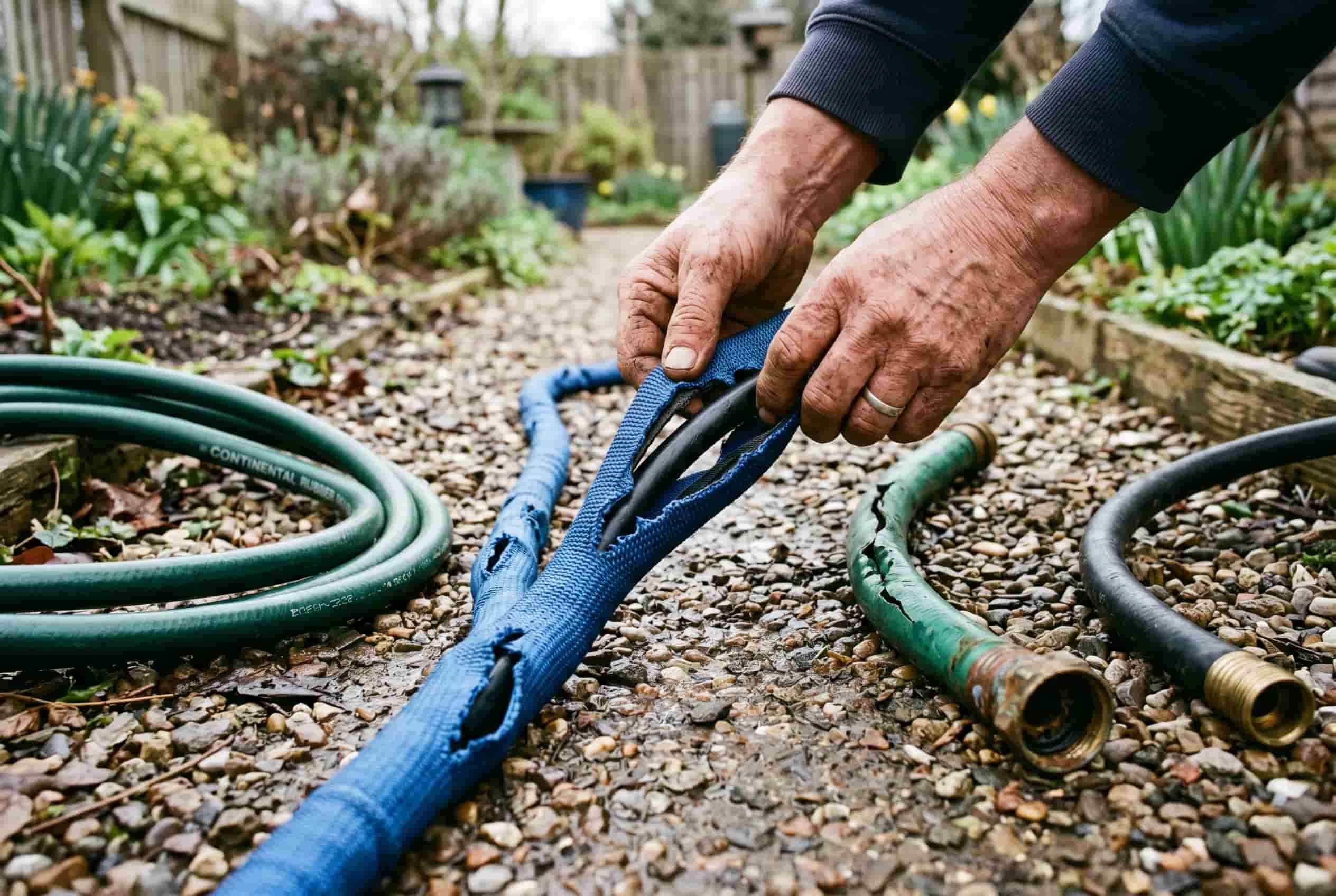
The lightweight expandable hose was the newest category. It weighed almost nothing, stretched when pressurized, and shrank back when drained. I bought a well-reviewed brand from a hardware store. It was wonderful in July and dead by February. The inner latex tubing froze, became brittle, and split in multiple places. When I turned on the water in spring, it sprayed from six different points along its length. Expandable hoses must be drained completely and stored indoors over winter in our climate. No exceptions. The packaging on mine said "freeze-resistant," which is not the same thing as freeze-proof. I learned the difference.
The standard vinyl hose was the classic green coil sold at every big-box store. It was the cheapest of the four. It kinked constantly during the season, which was annoying but manageable. By spring, the brass fittings were corroded where they had sat in wet leaf litter all winter. The vinyl casing had split in two places — one near the male end, one in the middle. This is the hose that most homeowners buy, replace every two years, and assume is the only option. It is not.
The rubber hose was the heaviest and most expensive. It was a Craftsman, which is what I grew up with in Maine. It never kinked. It was a pain to drag around because of the weight. But it was the only hose that came through winter undamaged. The rubber expanded slightly when frozen and contracted when thawed without cracking. The brass fittings showed some surface tarnish but were otherwise intact. This hose is ten years old now and still holds pressure. It is the only one I will buy for my main garden line.
What I Know Now
Buy a rubber hose for your main garden line. It costs more and weighs more, but it lasts a decade instead of two seasons. The difference in price is smaller than buying three vinyl hoses over the same period. I learned this after adding up the cost of the dead ones on my shelf.
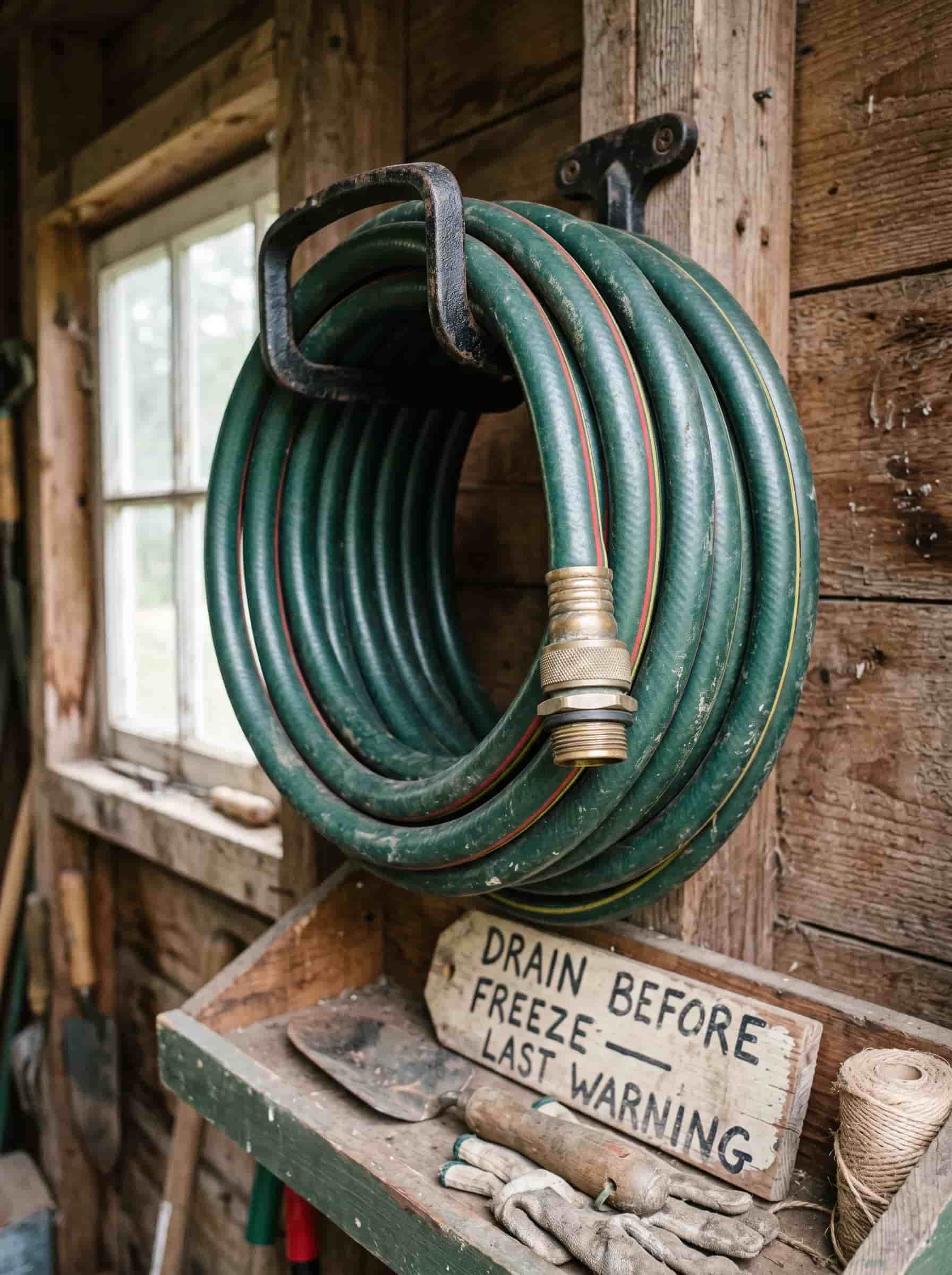
Store every hose properly at the end of the season. Drain it completely. Coil it loosely without kinking. Hang it on a proper hanger inside a shed or basement. A hose left on the ground with water inside it will freeze, expand, and split. The material of the hose determines whether it cracks or survives. But even a rubber hose will fail if it sits under a snowbank with water trapped inside and a vehicle runs over it. I have tested this too, accidentally, and the result was a flattened section that never recovered.
When you disconnect the hose in fall, also shut off the water supply from inside the house and open the outdoor spigot to drain. Water trapped against a closed valve freezes, expands, and cracks the pipe inside the wall. That is a plumbing repair that costs more than all the hoses combined. I did this once in my first rental apartment and flooded the basement in April. I will not make that mistake again.
The Survivors
The rubber hose is still on my spigot. The expandable hose lives in the shed in winter now, brought inside after every use in the cold months. The vinyl hoses are in the graveyard, cut into short lengths that I use as tree ties and drainage extensions for downspouts. Nothing goes to waste, but I do not buy vinyl anymore.
If you are buying a hose this spring, buy rubber or a high-quality polyurethane hybrid. Drain it completely before the first hard freeze. Hang it somewhere dry. A hose that is drained and stored will outlast a hose that is expensive and neglected. I have the dead hoses to prove it.

Letters
No letters yet — be the first to write.